
The chain belt predates the 90s by about 70 years, never actually left, and the version people are wary of is a completely different object. Two versions exist. One of them expires. One of them doesn't.

The chain belt predates the 90s by about 70 years, never actually left, and the version people are wary of is a completely different object. Two versions exist. One of them expires. One of them doesn't.
The chain belt is not a 90s invention. It is not a trend piece cycling back in. It has been present in fashion continuously since the 1920s, worn by the houses that do not make trend-driven decisions, reinterpreted by designers who treat the body as architecture rather than decoration.
What changed in the 90s wasn't that the chain belt arrived. What changed was how it was used. The decade produced one specific version of it: decorative, disposable, logo-dependent. That version lodged in cultural memory in a way that still shapes how people think about the whole category.
There are two versions of the chain belt. The costume version and the architectural version. They are not the same object. One of them dates. One of them doesn't. The difference is material, construction, and intent. Once you see it, you can't approach the category the same way again.
The 90s Are a Memory, Not the Origin
The History of the Chain Belt
Rewind. Not to 1993. To 1920.
Gabrielle Chanel replaced the traditional belt with a gold chain worn low on the hips, borrowed from military uniform hardware and equestrian saddlery. The function changed entirely. It wasn't there to cinch the waist. It was there to construct the silhouette. To interrupt the line. To draw the eye somewhere deliberate. From that point, the chain belt became a Chanel house code. Not a trend. A code.
In the 1960s, Paco Rabanne arrived with an architecture degree and used metal as fabric, joining plates with pliers instead of needle and thread. Coco Chanel called him "the metalworker" as an insult. He took it as a compliment. When Jane Fonda wore his metalwork in Barbarella, the chain moved past accessory into something closer to armor. Structure worn on the body.
The 80s gave it two simultaneous directions. Versace thickened it with carabiners, rings, and hardware, absorbing the decade's maximalism. Hermès went the opposite way: links drawn from equestrian fittings, goldsmith precision, mechanical restraint. Three different design languages. One object.
Then the 90s happened. The chain belt became coin belts and wallet chains off baggy jeans. It became Sienna Miller at Glastonbury, a boho number jangling over a T-shirt dress. That is the version that lodged in cultural memory. It is also the version people are wary of.
What the 90s did not do was invent the chain belt. The houses that built their reputations on construction never stopped using it. The chain belt moved through the decade without belonging to it. The 90s just gave it the loudest, most disposable iteration. That is the one that stuck.


The Costume Version
The version that earned the reputation
The costume-coded chain belt is a specific object. It is worth naming precisely so it can be separated from what the chain belt actually is.
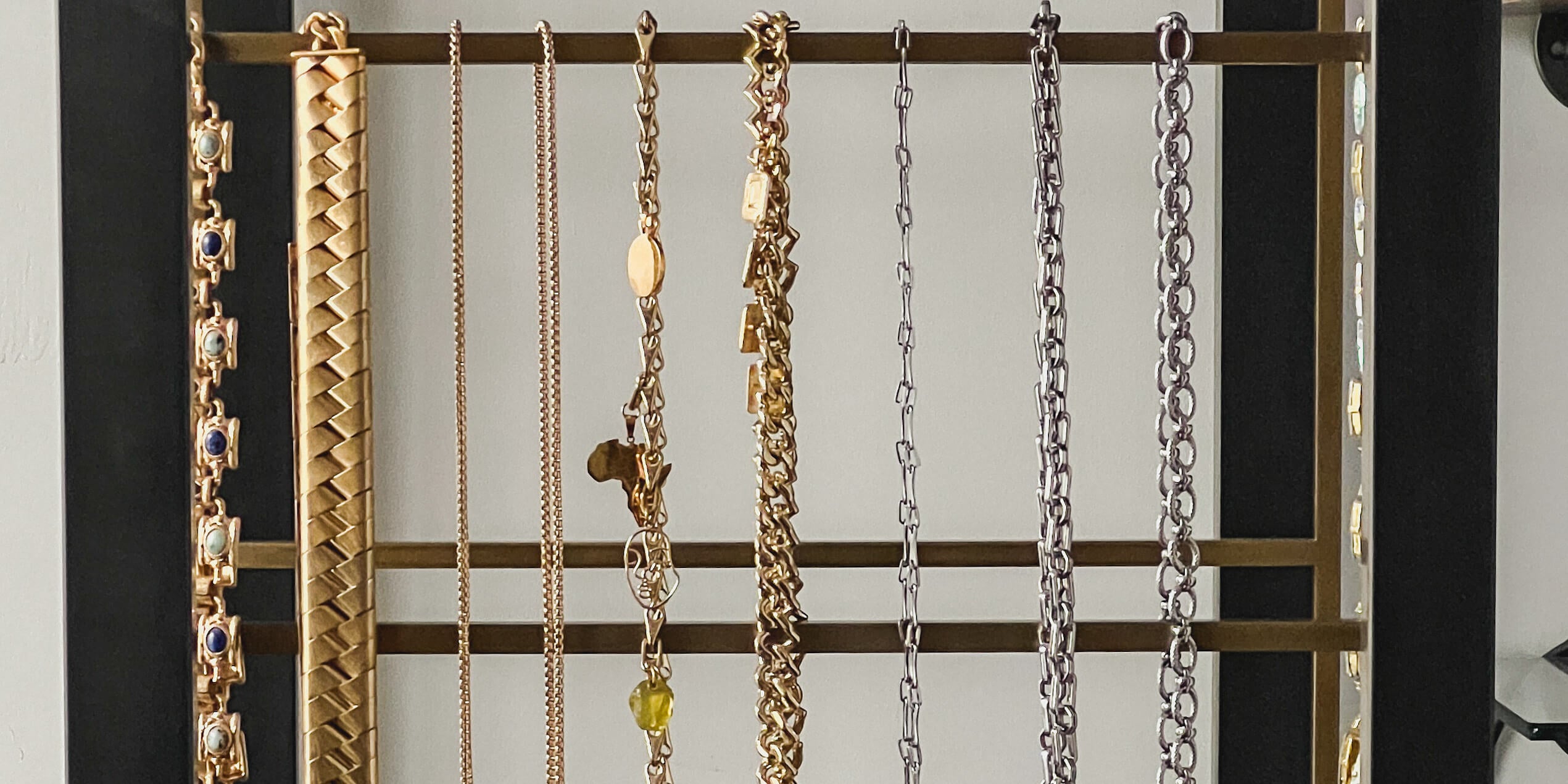
The costume version has recognizable features. Thin links that tarnish within months. Rhinestones, coins, or charms on every other link. Logo-dependent hardware that signals a brand rather than demonstrates quality. Worn slung low over low-rise jeans, or draped over a festival dress as a period piece. A belt that does one thing, and when that thing stops trending, it goes in a drawer.
The instinct people have about this version is accurate. Style communities have reached the same conclusion independently: body chains worn over clothing read as costume, dainty chains over simple outfits read as considered. What they are sensing without always having the vocabulary for it is the difference between a piece that was designed and a piece that was decorated.

The fear is not of the chain belt. It is of the chain belt done badly. The one that says "I found this at the back of a drawer" instead of "I chose this deliberately."
The Runway, NOW
Architecture over nostalgia
The 2026 runway is not asking whether the chain belt is back. It is asking what the chain belt can do to a silhouette. That is a different question entirely. And it is the right one.
Gabriela Hearst uses it as an architectural element. Hermès continues developing its equestrian repertoire with mechanical exactness. Marc Jacobs goes bold, running statement chains over colorful, maximalist silhouettes. Sacai FW26 goes heavier, mixed metals on all-black, adding structure where the look needs an interruption. Celine SS27 menswear goes the other way: barely-there chains that shift a simple outfit into something more deliberate. Chloé, Ralph Lauren, Isabel Marant. All in.
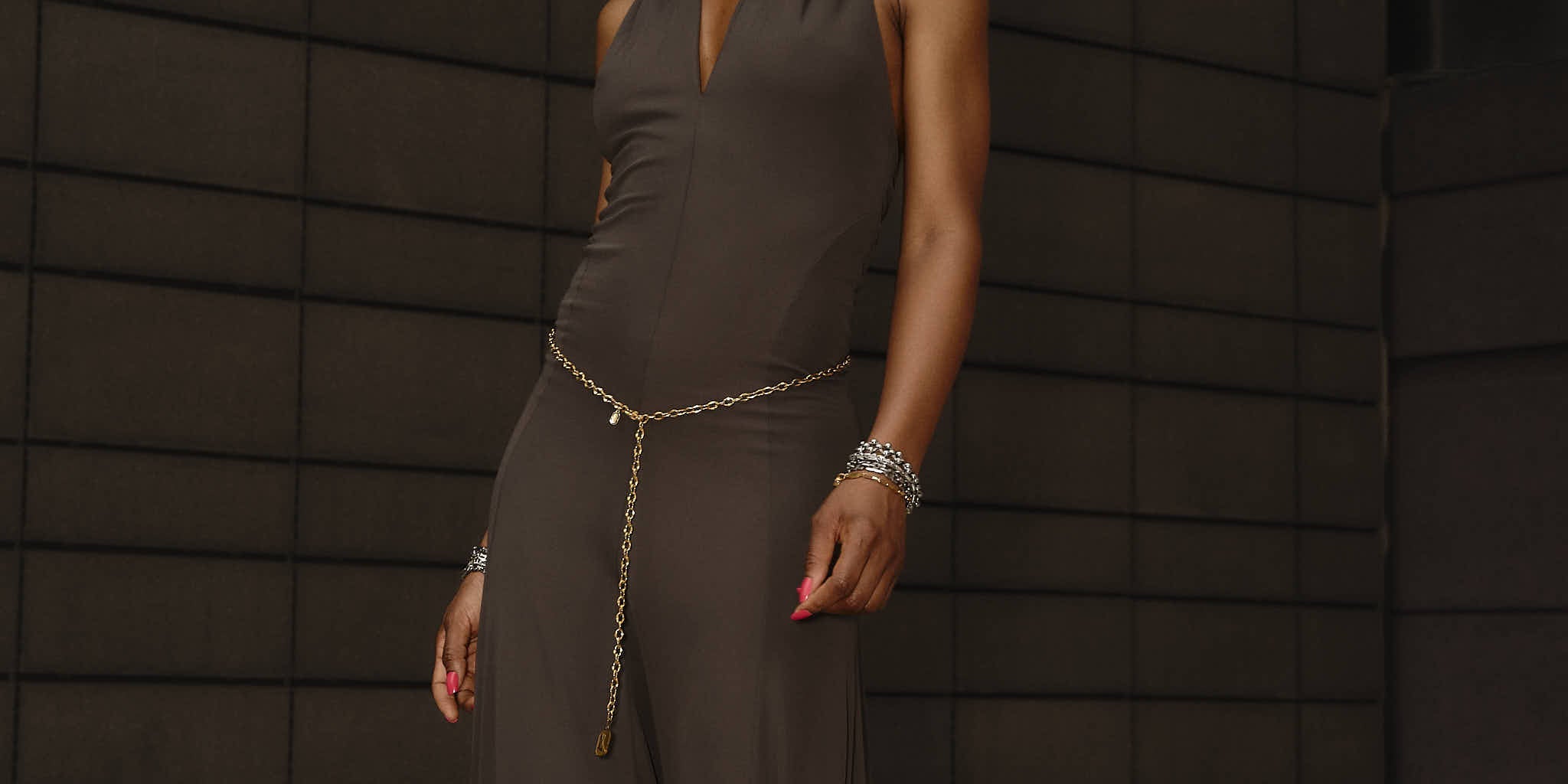
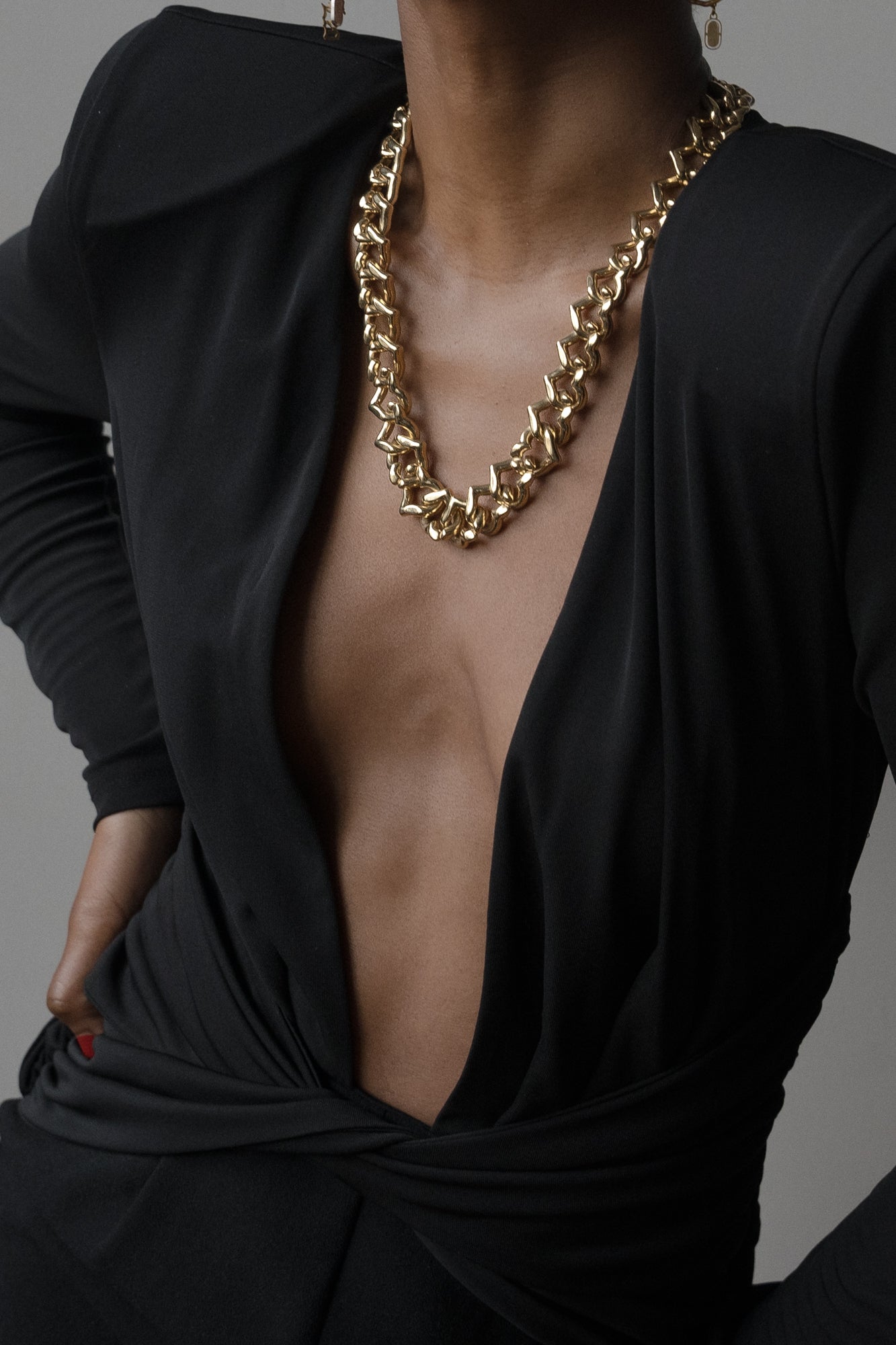
The line that should replace every "is it back?" headline: the chain belt does not define the waist. It interrupts the silhouette. Not a cincher. A line. A deliberate break in how the eye reads the body. The 2026 material direction makes the same argument. Links are large and compact, in burnished silver or satin gold. Logos are nearly absent. What earns the piece its place is quality of casting, weight of metal, construction. Not what name is on it.
The chain belt does not define the waist. It interrupts the silhouette. Not a cincher. A line. A deliberate break in how the eye reads the body.


The Lapo Version
Built like armor. Worn like art.
The Lapo Lounge chain belt is not a revival. It is its own proposition, one that extends the architectural tradition while doing something no previous version has done: making the piece genuinely functional, genuinely versatile, and genuinely for everybody.
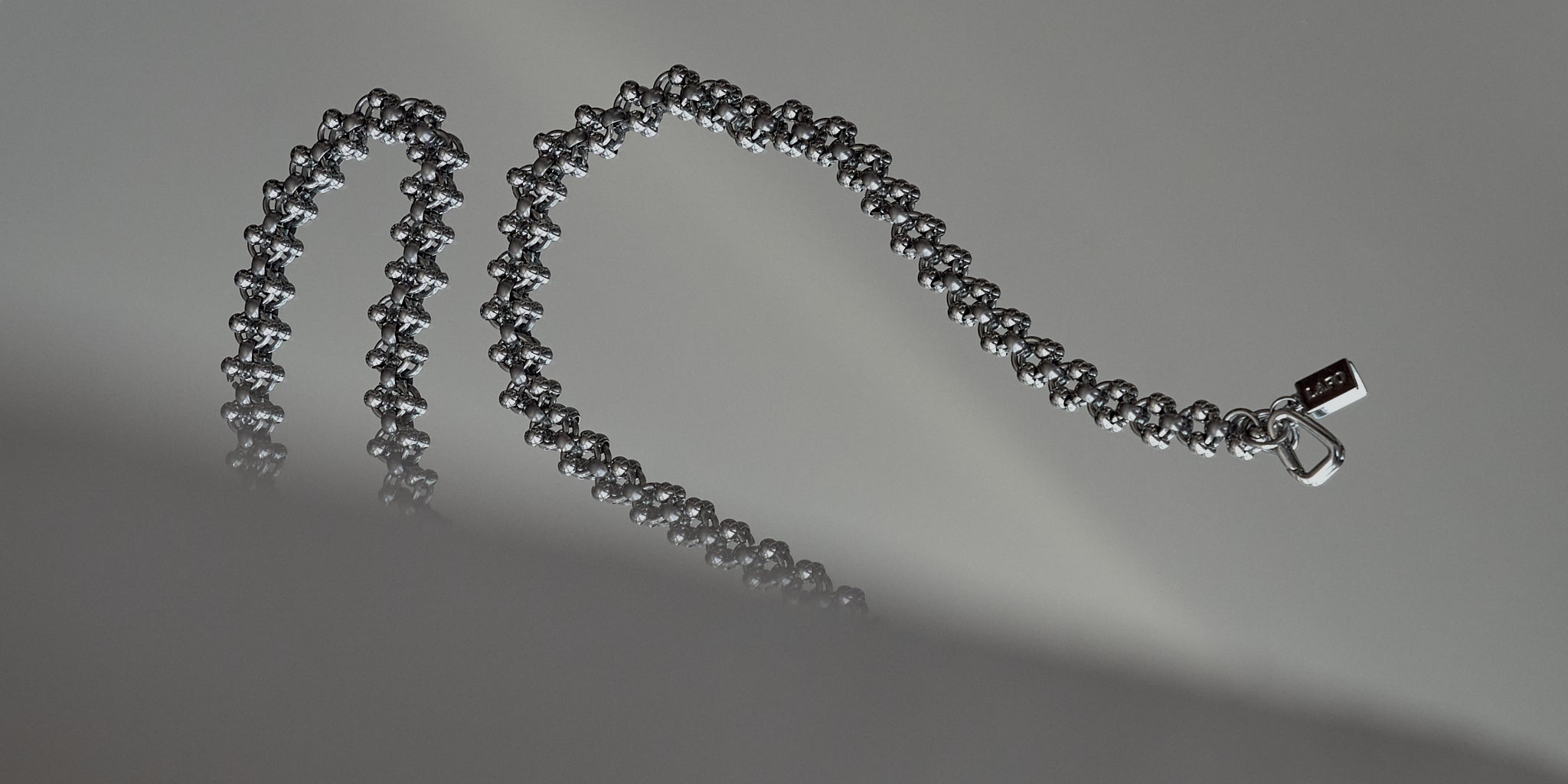
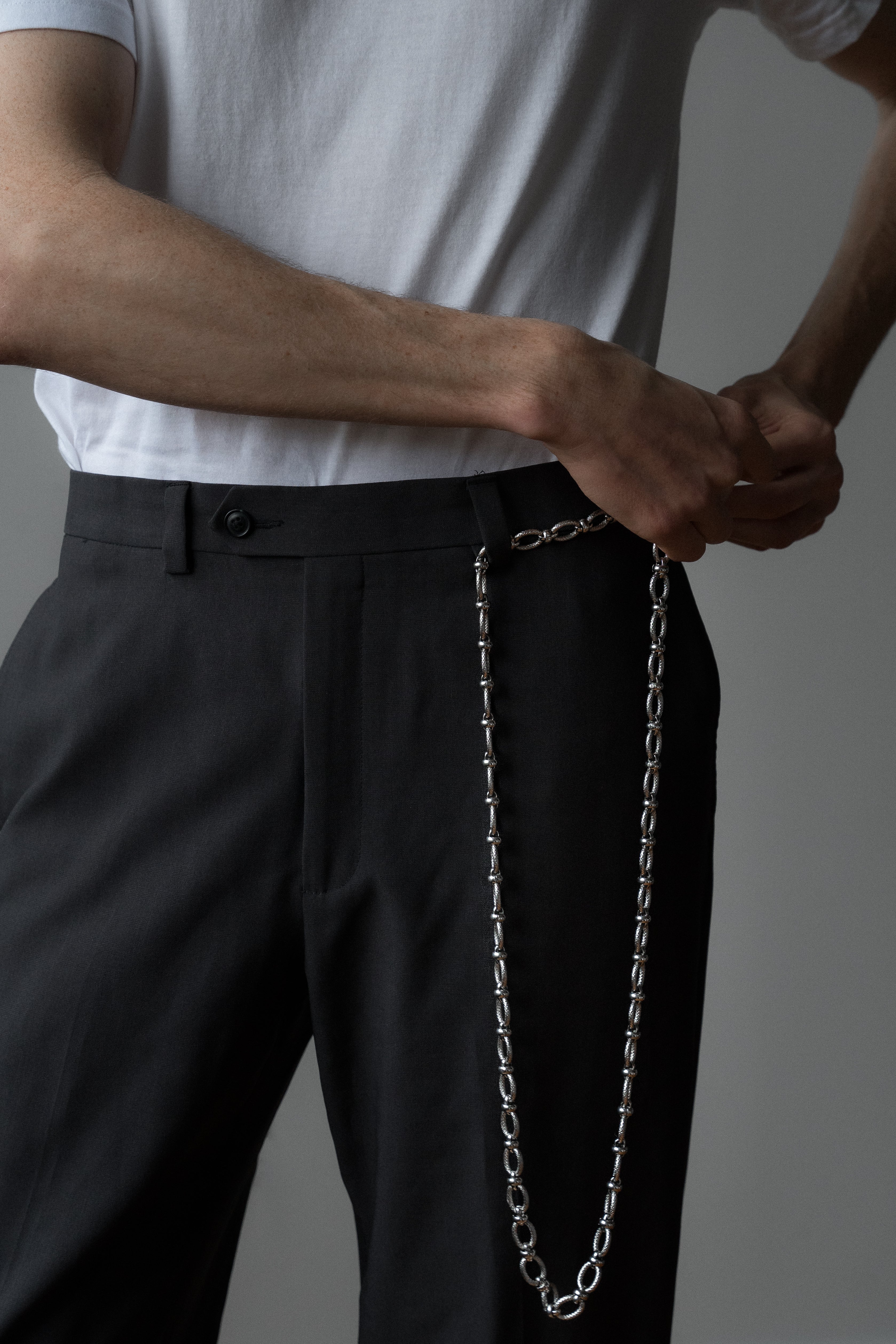
It is made from 100% recycled stainless steel. Tarnish-resistant, corrosion-resistant, safe for skin. Forty-six inches of adjustable chain that works as a belt, a necklace, a bag chain, or worn layered. One piece that functions differently depending on what the outfit needs. Designed to last. Not to trend.
Built like armor. Worn like art. That is the design philosophy, and it places Lapo in direct conversation with the lineage that matters. Rabanne, who used metal as fabric and called his work armor. Chanel, who used chain to construct a silhouette rather than decorate one. Hermès, who engineered links with the precision of a watchmaker. The Lapo belt belongs in that conversation. Made from recycled stainless steel in Brooklyn. Built to the same standard without the same century of overhead.


|
The 90s Costume Belt
|
The Lapo Architectural Belt
|
How to Style It So It Reads 2026, Not 1993
Five principles, none of them complicated
Keep the canvas simple. The more minimal the outfit, the more the belt works. A white tee and a black slip skirt is the purest version. Simple base, structural accent. The chain reads as a decision when it is the only deliberate element in the look.
Wear it over structure. Blazers, coats, linear dresses work. Busy prints or garments that already have a defined waistline do not. The belt's job is to interrupt the line of the garment, not compete with it.
Let it be the statement. Put everything on. Step back and look. If the chain belt is competing with statement earrings, a bold bag, and a printed scarf for visual priority, something needs to come off. The belt earns its place when the rest of the outfit gives it space.
Contrast is what makes it current. A chain belt paired with 90s-coded pieces pushes the whole look into costume territory. Pair it instead with clean, contemporary silhouettes. The metal reads as intentional when everything around it is restrained.
Weight is not vanity. It is construction. Pick the chain up before you decide. If it feels hollow, it will read hollow when worn. A belt with real mass falls correctly, holds its position, and communicates that it was made from something rather than assembled from nothing.
Three Looks That Work
Monochrome base in cream, black, or navy. Structured blazer. Lapo gold chain belt at the waist. The belt is the line that holds the whole look together.

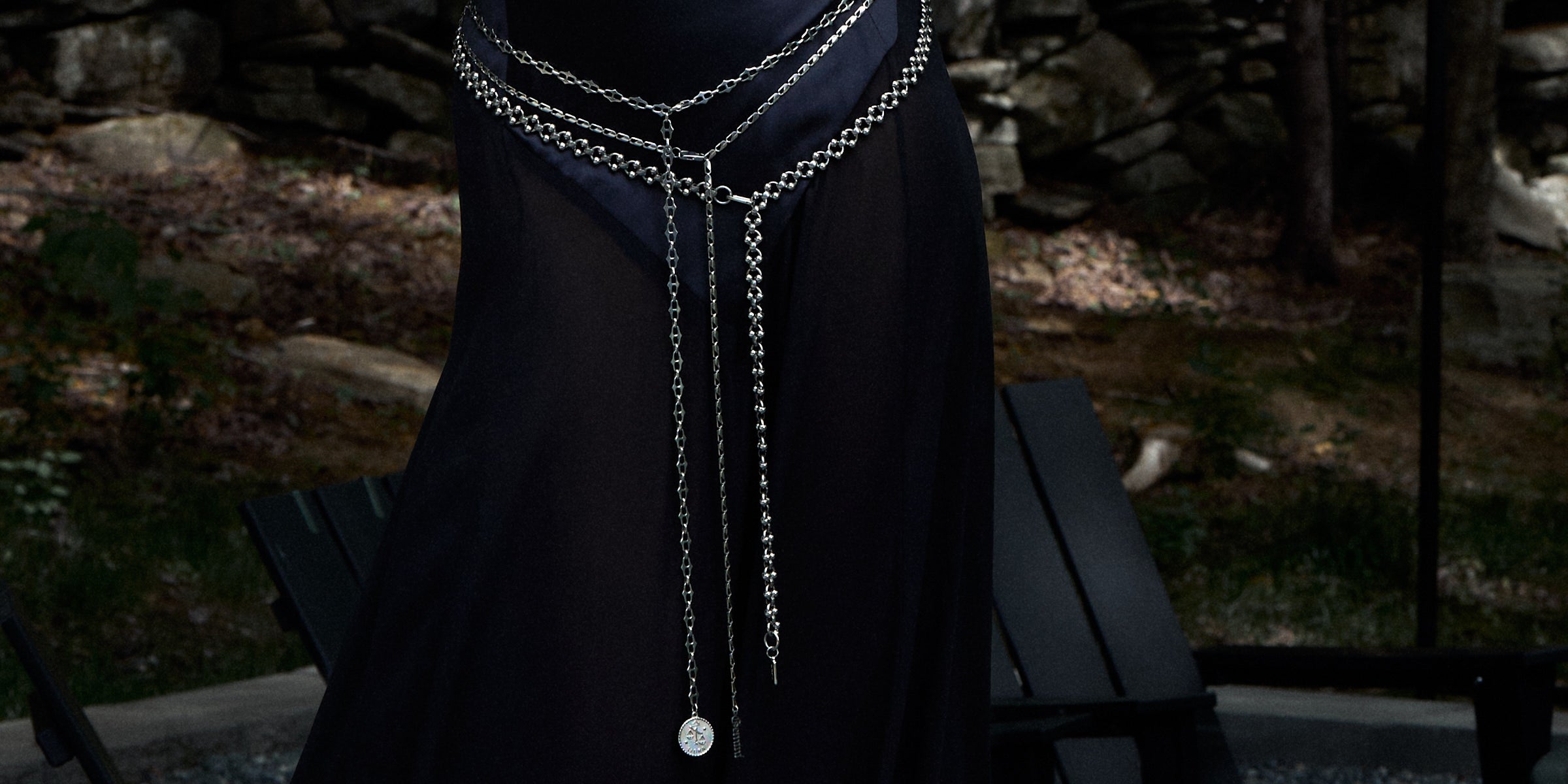
Head-to-toe black. One heavier chain in mixed metals, the approach Sacai took on the runway this season. Hardware that adds structure where the look needs an interruption. Try the Nebula Silver or Himalia Silver.

White tee. Straight-leg jeans. A thin Lapo chain belt at the natural waist. The most understated combination and often the most noticed. Give the chain one clean canvas and it does the rest.


QuestionS, Answered
Are chain belts 90s?
No. They predate the 90s by over 70 years. Gabrielle Chanel introduced the gold chain belt in the 1920s as a silhouette tool. The 90s produced one specific iteration that became culturally loud and is now culturally cautionary. The chain belt itself has been in fashion continuously since. The 90s just had the noisiest version of it.
Are chain belts tacky?
The costume version can be. Thin plated links, charm-heavy decoration, logo dependency, worn low over low-rise denim reads as period piece rather than design. The architectural version, solid construction and clean links worn as a silhouette element over a simple base, is a different object entirely. Same category. Completely different intent.
Are chain belts in style for 2026?
Yes. Gabriela Hearst, Hermès, Marc Jacobs, Chloé, Ralph Lauren, Sacai, Celine, and Isabel Marant all put chain belts on their 2026 runways. The direction is architectural rather than nostalgic. Large compact links, quality casting, logos nearly absent. The material earns the piece its place now, not the name.
How do you wear a chain belt without looking dated?
Simple silhouettes. Clean cuts. Let the belt be the one deliberate element. A chain belt reads as intentional when everything around it is stripped back. The moment it sits alongside platform sandals, tinted sunglasses, and low-rise denim, the look tips into costume. The belt is the same. What surrounds it changes everything.
What is the difference between a 90s chain belt and a modern one?
Intent. The 90s version was decorative. It existed to dress up a look. The modern architectural version exists to structure one. Thin plated links versus solid steel. Charms versus clean construction. Single use versus multi-functional. The tell is in the weight. Pick it up. Real mass means real construction. Hollow means costume.
Is the chain belt genderless?
Yes, and Lapo Lounge is leading that charge. The chain belt has never been inherently gendered, but the industry has largely presented it on female bodies, as decoration, at high price points that do not reflect the material. Lapo Lounge is building a different vision: a chain belt that is functional enough to hold up pants, versatile enough to wear five ways (belt, necklace, bag chain, crossbody, wallet chain), and designed for any body. We want to see more men wearing chain belts. More people wearing them who have never considered them. The chain belt revolution is not a nostalgia play. It is a new category claim.

The chain belt has outlasted every era it has moved through. Chanel used it to construct silhouettes in the 1920s. Rabanne used it as armor in the 1960s. Versace made it into hardware in the 1980s. Hermès kept engineering it with mechanical precision. None of them made it functional in the way it deserves to be: versatile enough to wear five ways, adjustable to any body, built from a material that holds its finish without maintenance.
That is what Lapo Lounge is building. Not a revival. A new version of what the chain belt can be.
Does it interrupt the silhouette? Does it give the eye somewhere deliberate to go? Does it hold up your pants, anchor a slip dress, work as a necklace on Tuesday and a bag chain on Saturday? Does it feel like it was made from something rather than assembled from nothing?
A Lapo Lounge chain belt answers yes to all of it. Recycled stainless steel. Made in Brooklyn. Adjustable, multi-functional, built to last. The chain belt is not having a moment. It is having a reckoning. This is what the right side of it looks like.