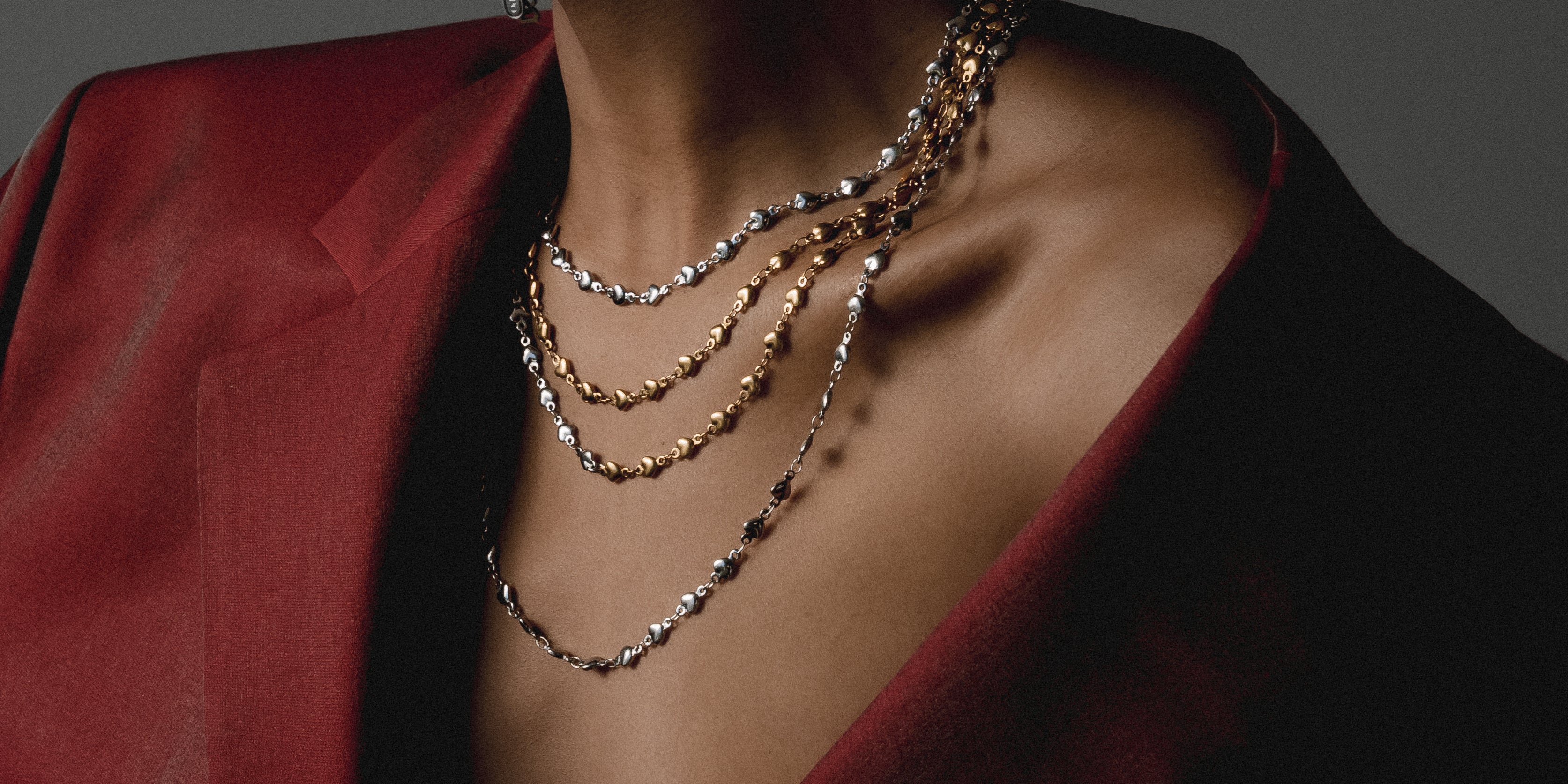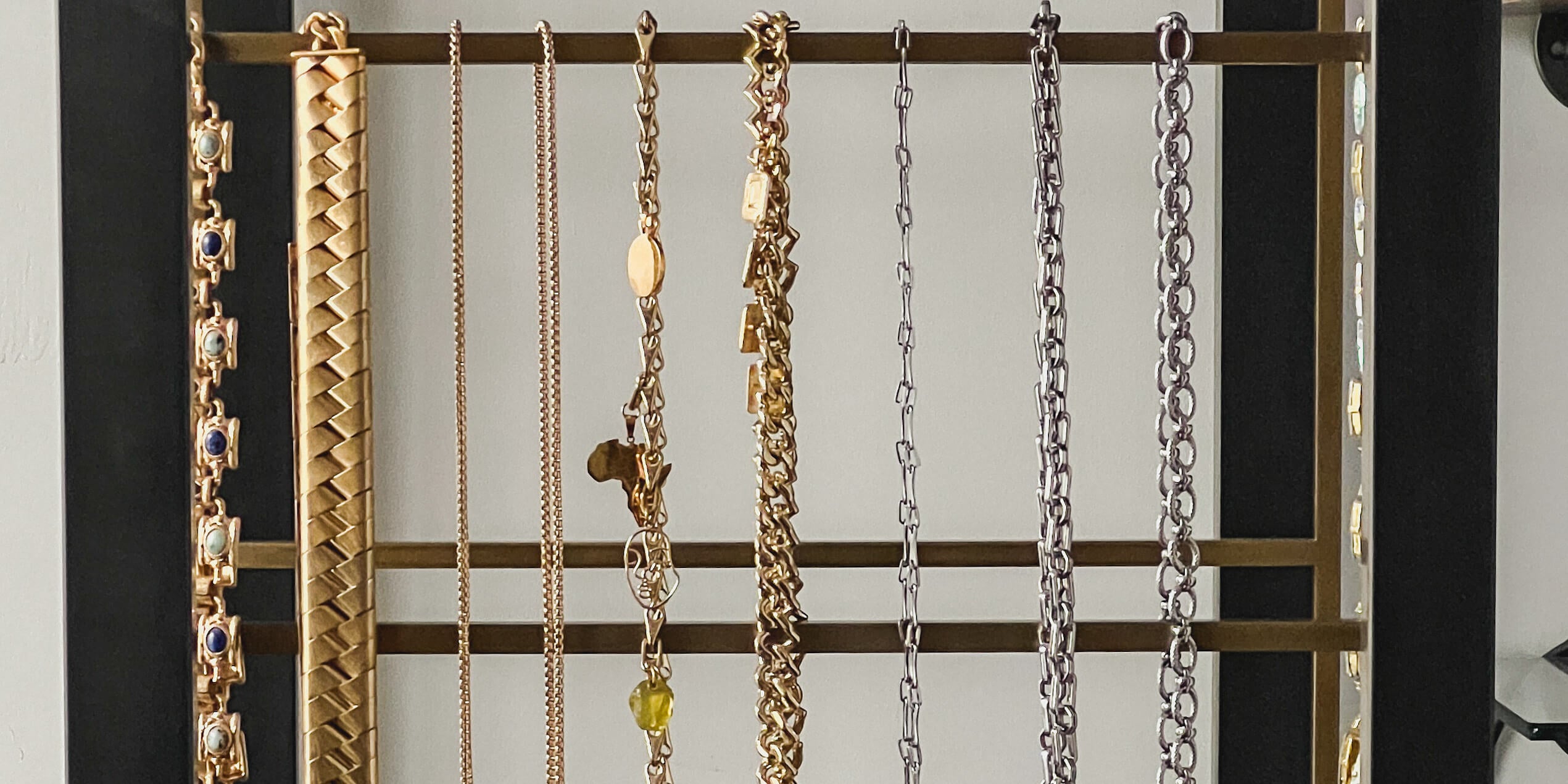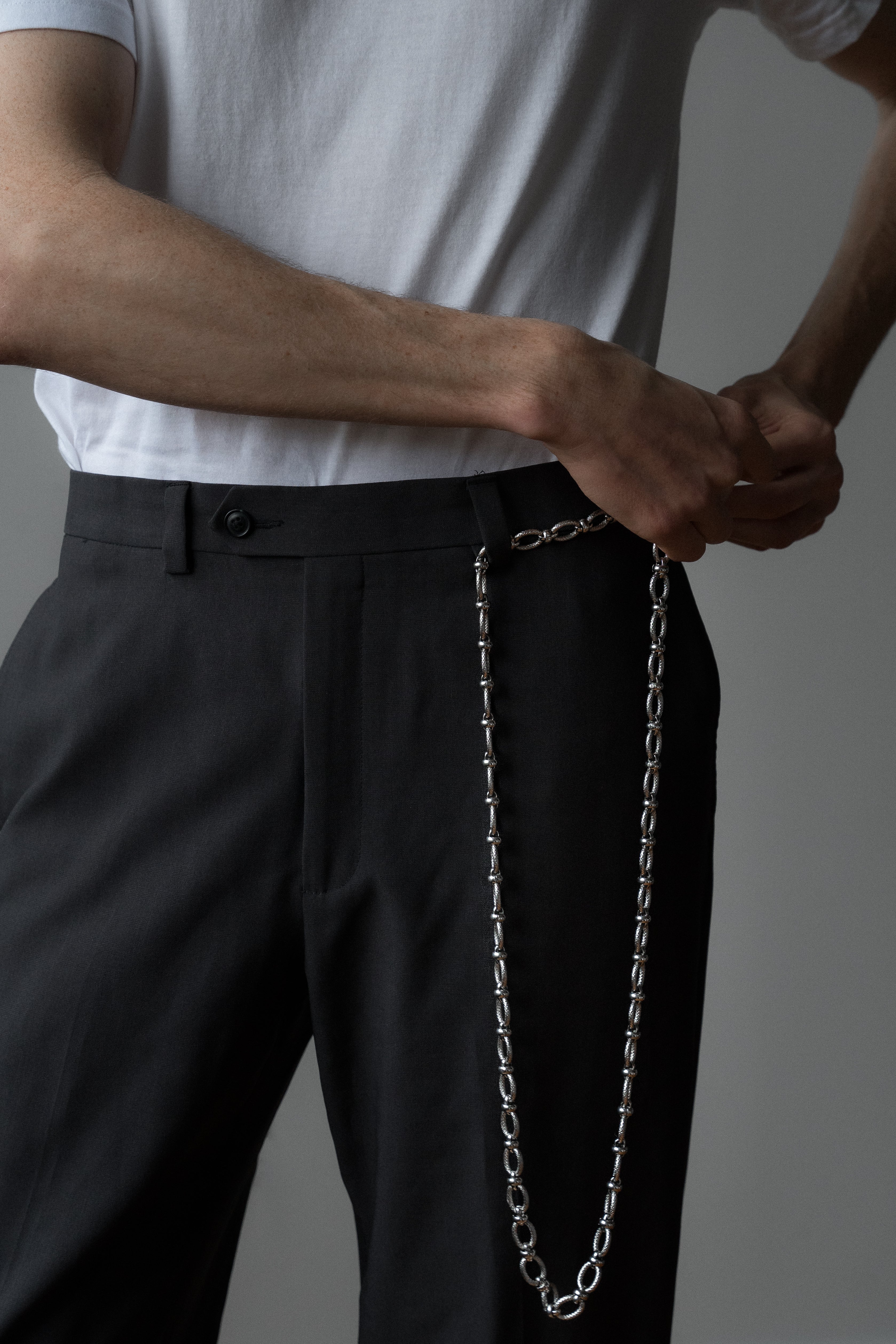
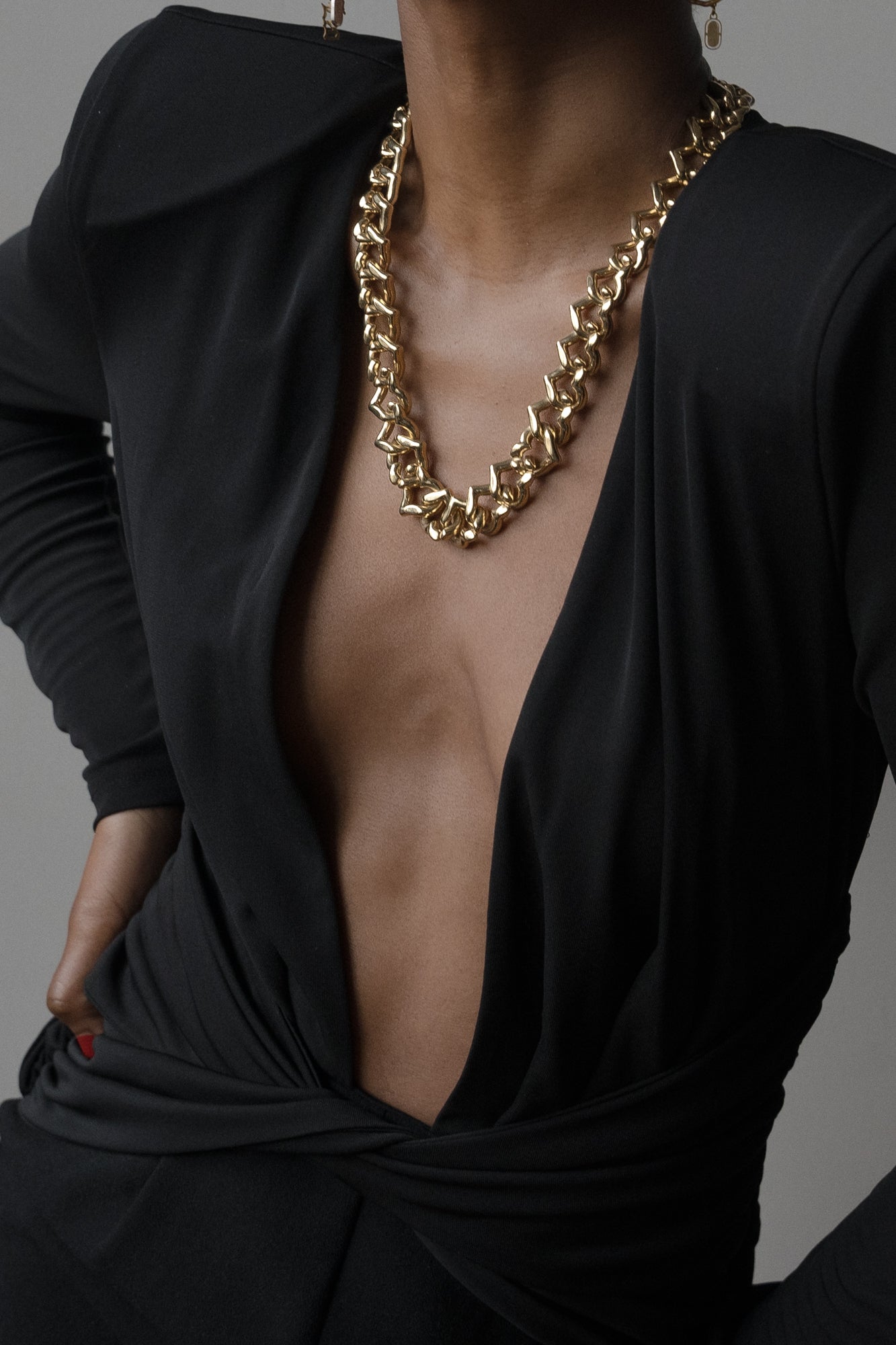

Four things determine whether a chain belt works. Not the label. Not the price. Weight, material, placement, and proportion. Get those right and the chain belt does everything it should. Get them wrong and no price tag fixes it.

A chain belt worn correctly is one of the most deliberate styling choices in a wardrobe. A chain belt worn incorrectly looks like an afterthought or a costume. The difference between those two outcomes is not mysterious. It is specific and learnable.
The Short Answer
What decides it
 Four things determine whether a chain belt looks deliberate or cheap:
Weight. A chain with mass falls correctly, holds its position, and looks architectural. A chain with no mass shifts, floats, and signals decoration in the wrong sense of the word.
Material. The base metal determines whether the finish holds over time. A chain belt that tarnishes, plates unevenly, or shows its base metal through the finish looks inexpensive regardless of how it looked when new. Stainless steel holds its finish. Brass over base metal does not.
Placement. A chain belt that sits where it should — at the natural waist or slightly below, as an architectural interruption to the silhouette. It looks deliberate. A chain that slides to the hip bone, sits crookedly, or is cinched so tight it creates bunching above and below looks unstyled.
Proportion. The weight and scale of the chain has to match the weight and scale of what it is worn with. A heavy chain on a delicate fabric overwhelms. A fine chain on a heavy fabric disappears. Neither is the goal.
The line is not about the chain belt. It is about whether the chain belt was chosen for the outfit or thrown on top of it. One signals intention. The other signals decoration.
Weight
The first thing to get right

Pick the chain up before anything else. The weight in the hand is the most accurate preview of how it will behave on the body.
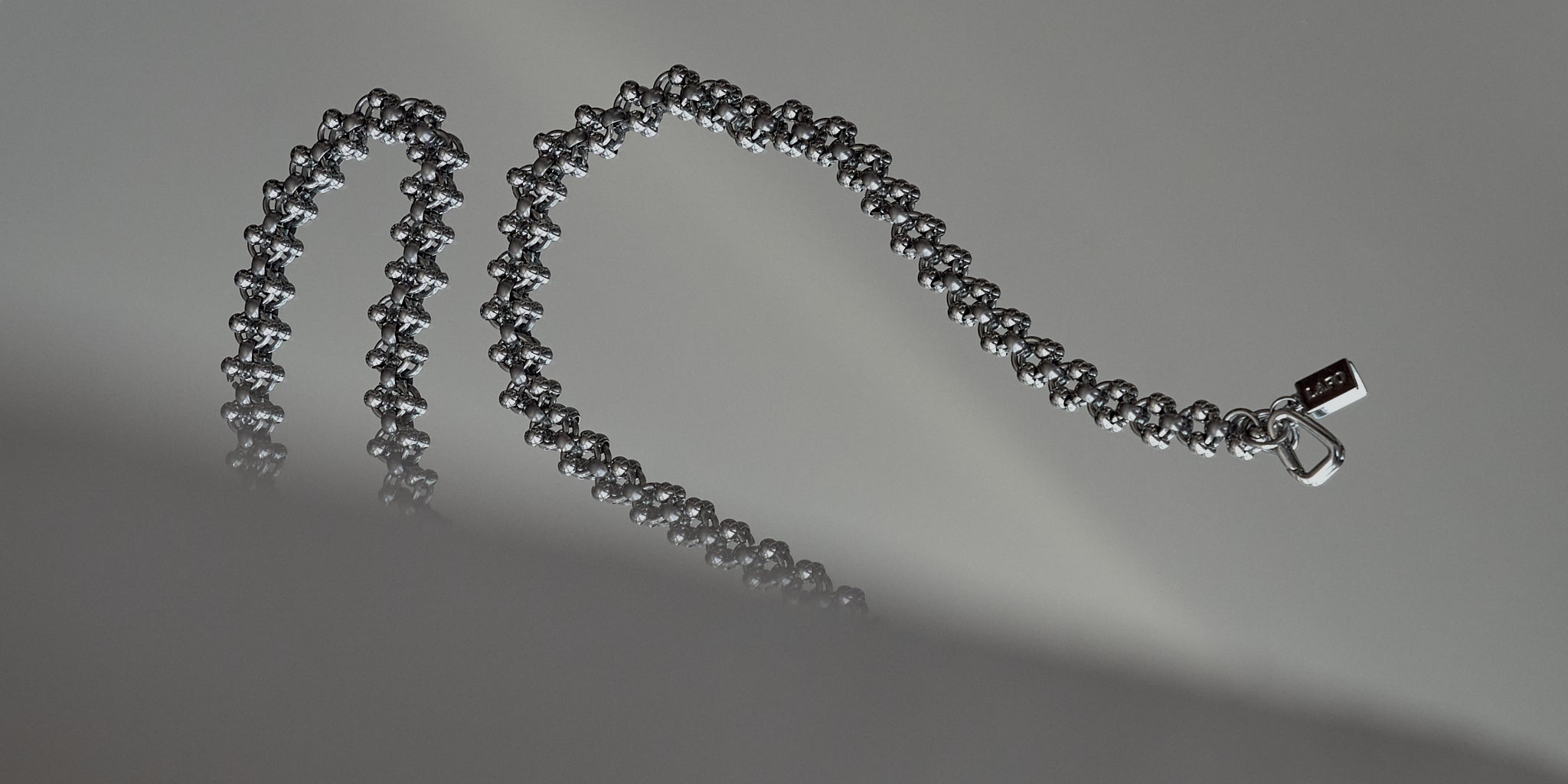
A weighted chain falls with gravity. It holds its position at the waist. When hung long it creates a vertical line with structural authority. The eye follows it because the chain has enough mass to fall straight, not because it has been arranged. The weight of the metal and the quality of the casting are what distinguish a deliberate piece from a cheap one. A chain that feels hollow when held will look the same way when worn.
This is especially true for the more distinctive styling uses of a chain belt — worn as a necklace, as a crossbody, or down the spine of an open back dress. Those configurations only work when the chain has enough mass to settle into position on its own. A lightweight chain requires constant adjustment. A weighted chain requires none.
Hold the chain in one hand and let it pool in the palm. A chain with the right mass feels substantial. You know it when you feel it.
If the chain feels negligible in the hand, it will feel negligible on the body — and look that way to everyone else in the room.
Material
What the finish is actually sitting on

Gold or silver color is not a material. It is a finish applied to a base metal. The question is what that base metal is. The base metal determines how long the finish holds and what happens when it starts to wear.
Zinc alloy and unspecified base metals tarnish within months of regular wear. The plating wears unevenly and the base metal shows through. Often in patches that are most visible at the links and clasp, exactly where the chain is handled most. No amount of styling compensates for a chain belt that looks visibly worn.
Brass behaves better than alloy but is still subject to plating wear over time. It is worth noting that brass appears across a wider price range than most buyers expect — including at price points where the finish is assumed to be better than it is. A high price does not mean a better base metal. It often means a better finish over the same base metal, which is a different thing entirely.
Stainless steel is the correct material for a chain belt designed for daily or regular wear. The chromium content forms a self-repairing protective layer at the molecular level — not a coating applied on top, but the composition of the metal itself. It does not tarnish. It holds its finish without replating. The chain looks the same in six months as it did on day one.
Before the styling, before the placement, before any other consideration: what is the base metal?
“Stainless steel” or “316L stainless steel” is the answer that predicts longevity. “Metal alloy” without specifics, or gold-colored anything without naming the base, is the answer that predicts a chain belt that looks different in six months than it does today.
Placement
Where on the body, and how

A chain belt functions as a silhouette interrupter, not a waist cincher. It does not define the waist. It interrupts it. That distinction changes everything about how it should be positioned.
At the natural waist, the chain creates a horizontal line that the eye interprets as a deliberate division of the silhouette. Slightly below — at the high hip — it looks more relaxed and movement-oriented. Both are correct depending on the outfit and the intention.


What looks unconsidered: the chain sliding to the hip bone and sitting there unevenly, the chain cinched so tight it creates fabric bunching above and below, the chain positioned on a garment that already has a waist detail built in. All three create visual confusion where the styling should create visual clarity.
The other consideration for placement is occasion. A chain belt worn at the waist over a structured coat is editorial. A chain belt worn low-slung over a casual dress at a formal event looks underdressed. The chain belt is not inherently formal or casual — placement and context determine which territory it occupies.

|
Works
|
Doesn’t Work
|
Proportion
Matching the chain to the outfit

The chain has a weight and a scale. The outfit has a weight and a scale. Those two things need to be in the same territory for the combination to work.
A heavy, substantial chain over a delicate silk slip overwhelms the fabric. The chain becomes the entire outfit and the dress becomes background. A fine, delicate chain over a heavy knit or a structured coat disappears into the weight of the garment. Neither is the goal. The goal is a chain that the outfit can hold without being dominated by it or losing it entirely.
The cleaner principle: the simpler and more minimal the outfit, the more presence the chain can have. The more detail and weight the outfit already carries, the finer and daintier the chain should be. A chain belt worn over jeans and a plain top makes a strong statement precisely because the jeans and plain top give it the space to. Add competing prints, statement earrings, multiple layered chains, and the chain belt stops making a statement and starts adding to the noise.

Proportion also applies to the chain relative to the body. A very long chain that extends significantly below the waist needs enough of the body proportions to anchor it. A very short, tight chain belt needs a waistline it can work with. Neither the body nor the chain is wrong. It is always a question of whether this specific chain is the right scale for this specific outfit on this specific body.
Put on everything you plan to wear. Look at the overall picture. The chain should be the one thing you notice first. If there are three other things competing for that position, one of them should come off.
If the chain disappears, it is too fine for the outfit. If the chain is the only thing you can see, the outfit is too delicate or the chain is too heavy. The right proportion is when the chain and the outfit are in conversation, not competition.
Mixing Metals
The rule that no longer exists

Until recently, mixing gold and silver in the same look was considered an error. That rule no longer holds. Two-toned hardware has become a deliberate design choice, and the styling world has followed. The rule was always about habit rather than principle.
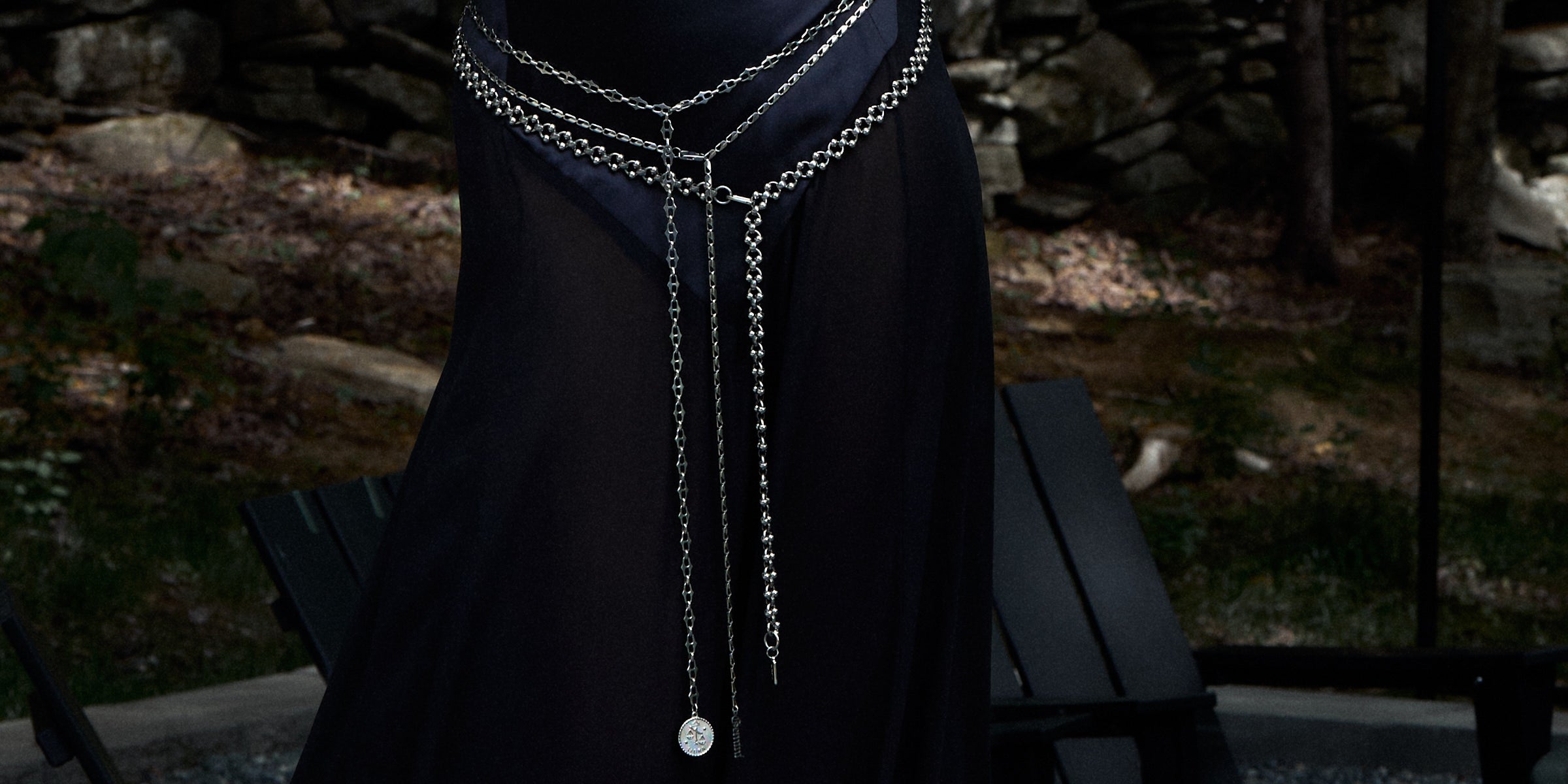
For chain belts specifically: wearing a gold chain belt and a silver chain belt together — or layering a two-toned chain with single-metal pieces — is not only acceptable but genuinely interesting when the combination is intentional. The test is whether the mixing looks purposeful or accidental. Two metals in deliberate contrast communicate a design decision. Random mismatched metals with no visual logic communicate indecision.

The practical limit: two metals. Gold and silver together create contrast. Gold and silver and rose gold and gunmetal create confusion. If the belt is mixed-metal, the other jewelry should be single-metal to provide a reference point.
The Styling Formulas
Four specific combinations that work
Proven Combinations
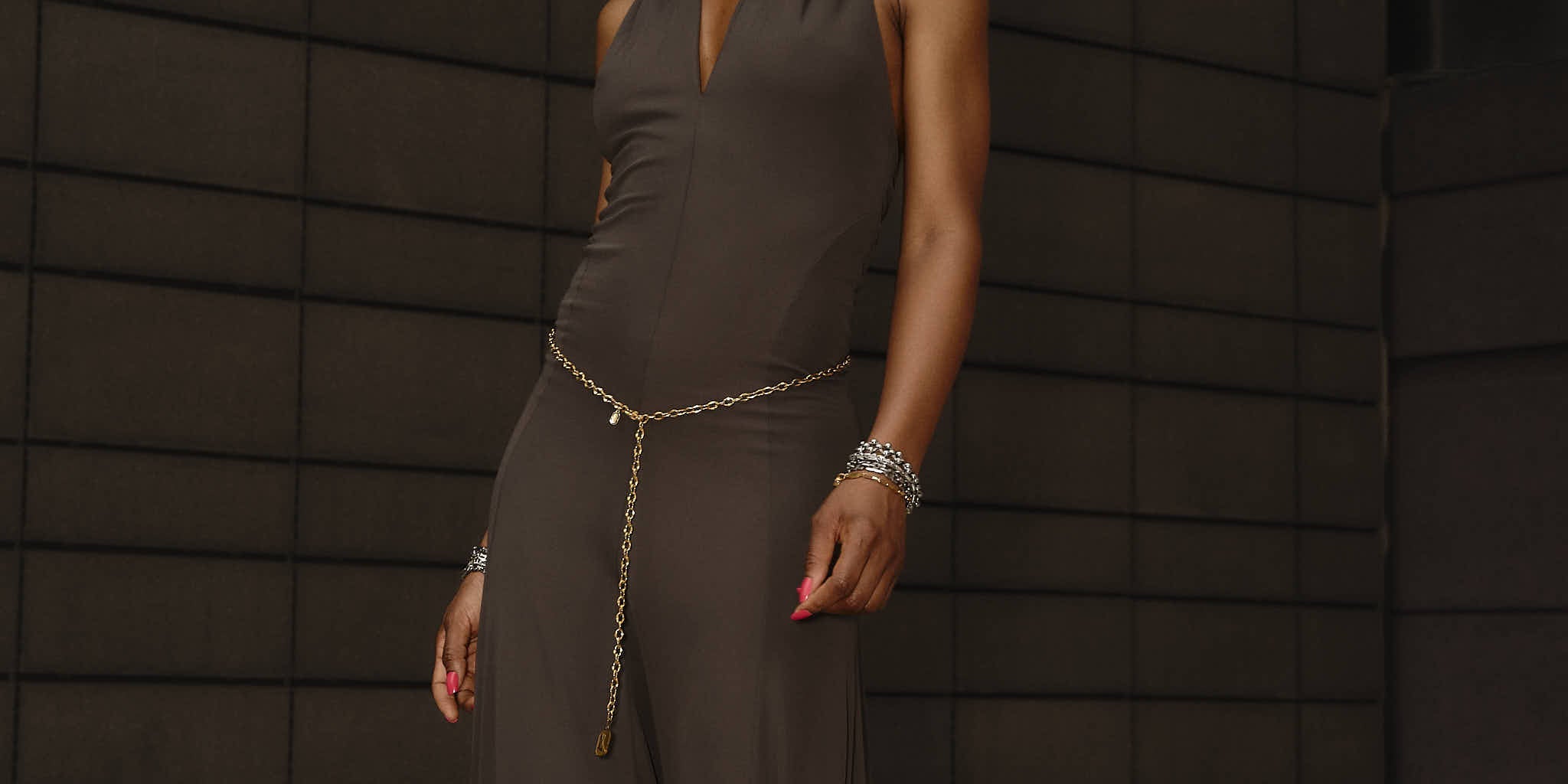
Monochrome base in black, navy, or cream — one solid color, no print — with a substantial gold or silver chain belt at the natural waist. Minimal other jewelry. Quality shoes. The chain does all the work because the outfit gives it the space to. Try the Zira Gold or Eris Silver.

A structured blazer or coat worn open over a simple base, chain belt at the waist over the outermost layer. The belt creates a waist where a coat or blazer worn open would otherwise have none. The more structured the outer layer, the more presence the chain can have. Chain belts over blazers, coats, and linear garments work as an architectural element. The hardware gives the tailoring an edge that another layer of fabric cannot. Try the Nebula Silver or Himalia Silver.

A midi or maxi dress with a delicate chain belt at the natural waist. Solid colors give the chain the most room to work. A subtle print can work if the chain is the only waist detail and the rest of the look is minimal. The chain adds a vertical line to a floaty silhouette without competing with the movement of the fabric. One metal, no other waist detail, sandals. Try the Rogue Zodiac, Forge Monogram or Nova Silver.

High-waisted straight-leg jeans, a plain tucked-in top, and a chain belt at the natural waist. The simplicity of the denim base is what allows the chain to land. Gold against dark denim is the strongest contrast. Silver on medium wash is more casual. No competing accessories at the waist or neck. Try the Zira Gold, Aminatu Charm or Callisto Gold.


What Actually Looks Cheap
The specific things to avoid
None of it is about the category. All of it is about execution.
A chain that shows its base metal. Uneven plating or tarnishing is visible immediately and cannot be styled around. The material question needs to be answered before purchase, not after.
Multiple chains stacked at the waist without intention. One chain at the waist is a statement. Two is occasionally interesting with a clear visual logic. Three can sometimes read as costume. The exception is deliberate layering — different gauges, different metals, a clear hierarchy that makes the combination look chosen rather than accumulated.
A chain competing with everything else. Statement earrings, a statement necklace, a statement bag, and a chain belt in the same look is not maximalism. It is noise. One focal point per look is the principle that holds across every styling context. The chain belt can be that focal point, but it needs the rest of the outfit to give it space.
A chain that does not fit the occasion. A heavily decorative chain belt at a reserved formal event signals a misread of the room, regardless of how good the chain is. Occasion awareness is part of the decision.
A chain sliding out of position. A belt that has moved from where it was placed, that sits unevenly, or that is being held up by nothing, looks undone. The clasp needs to hold and the chain needs enough weight to stay where it was put.
Questions — Answered
Are chain belts in style in 2026?
Yes. Both fine and substantial chain weights are present at the runway level across multiple 2026 collections. The category is not trending in the sense of being new, it is an established wardrobe piece with clear ongoing relevance. The question is not whether the chain belt is in style. The question is how to wear it.
Can you wear a chain belt casually?
Yes. A chain belt over straight-leg jeans and a plain top is one of the most classic ways to wear it. The key is keeping the base simple enough that the chain is the first thing someone notices. Which means the plainer the denim and the top, the more clearly the chain does its work.
What is the difference between a chain belt that looks expensive and one that looks cheap?
Material and weight, in that order. A chain belt made from stainless steel with enough gauge to have real mass will hold its finish and fall correctly. A chain belt made from plated alloy with hollow links will tarnish and shift. The visual difference between those two outcomes is significant and becomes more pronounced the longer the piece is worn.
Should a chain belt match your other jewelry?
Not necessarily. Mixing metals intentionally is a valid approach. What matters is whether the combination has a visual logic — a deliberate contrast rather than an accidental mismatch. If the belt is mixed-metal, keep other jewelry single-metal. If the belt is single-metal, other jewelry can follow or intentionally contrast.
Can you wear a chain belt to a formal event?
Yes, with the right chain and the right placement. A fine, high-quality chain over a structured blazer or a linear dress works for formal occasions. A heavy, decorative chain over a sequined gown creates competing focal points. The occasion narrows the field but does not eliminate it. The chain belt worn as a back detail on an open-back evening dress is one of the most distinctive formal stylings to try.
The question “are chain belts classy” is the wrong question. It is asking the category to answer what only the execution can.
A chain belt made from the right material, with enough weight to fall correctly, placed with intention on an outfit that gives it room to do its work, that is one of the most deliberate styling choices in a wardrobe. It works across casual, formal, and everything between. It works on anybody. It adjusts to any waist, any hip, any occasion.
The chain belt that looks cheap is always the one that was not thought about. The material that tarnishes, the placement that drifts, the outfit that was already doing too much before the chain arrived. None of that is the chain belt’s fault. All of it is fixable.
The piece is not the problem. The conditions are. Get the conditions right and the question answers itself.