
Wedding season has a way of making even the most decisive dressers second-guess themselves. You find the dress — the right length, the right color, nothing that risks upstaging the bride — and then you stand in front of the mirror and think: something is missing. Most people solve this with jewelry at the collarbone or a clutch in a contrasting color. There's a better answer.
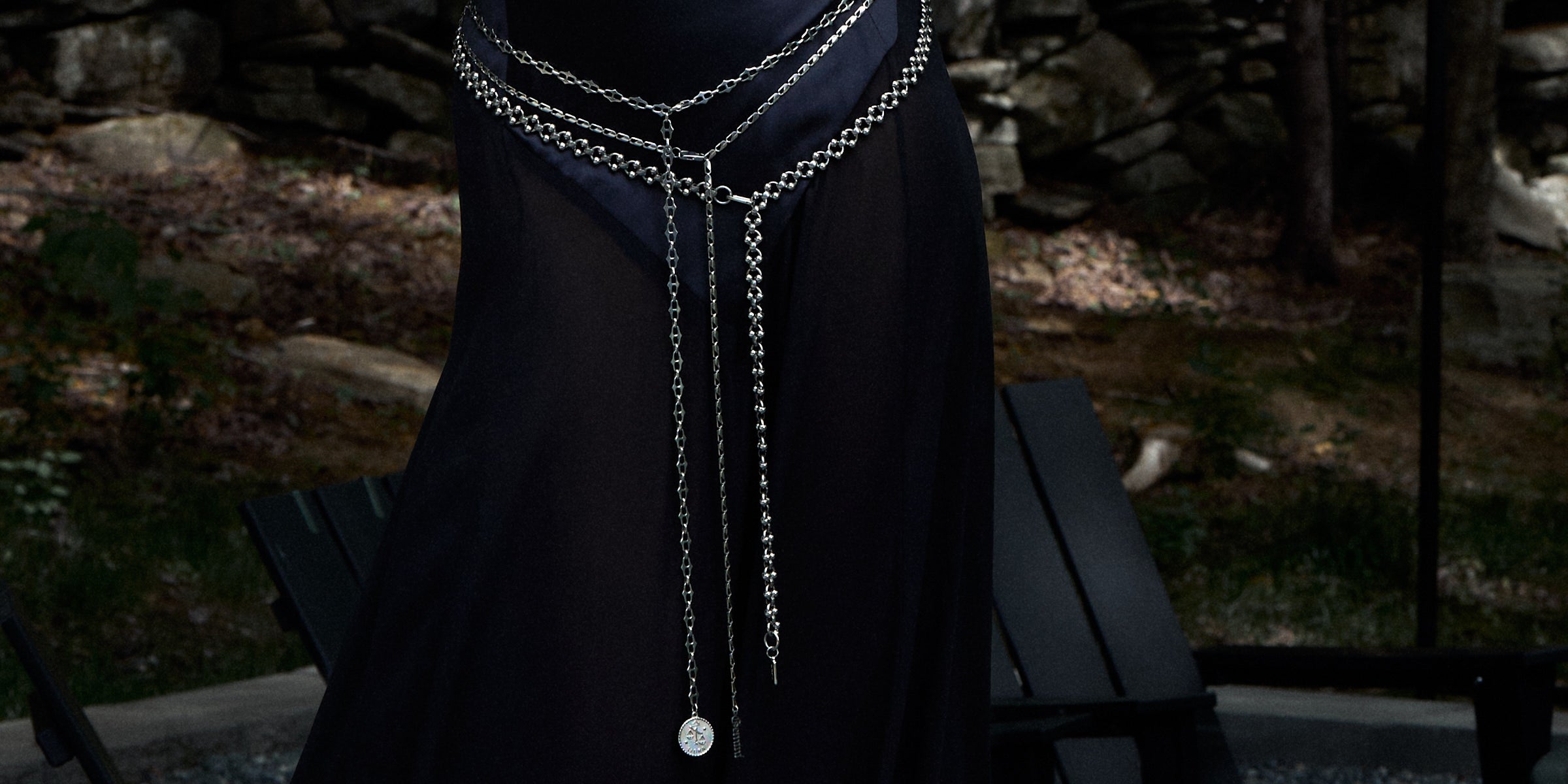
A chain belt worn to a wedding is one of those styling moves that seems counterintuitive until you see it in practice, and then you wonder why you ever did it any other way. It defines the silhouette without adding volume. It adds intention without adding noise. And worn on an embellished or maximalist dress — the kind of statement gown that already has a lot going on — it does something unexpected: it gives the eye a place to land in the middle of all that pattern and movement. Structure within the beautiful chaos.
This is the piece that people mention at the end of the night when they say you looked incredible.

Why a chain belt works where other accessories don't
In 2026, the consensus among fashion experts is that wedding guests are looking for pieces that feel elevated, fashion-forward, and aligned with the overall mood of the day. The challenge is that most accessory advice defaults to the predictable — statement earrings, a metallic clutch, strappy heels. All fine. All forgettable.
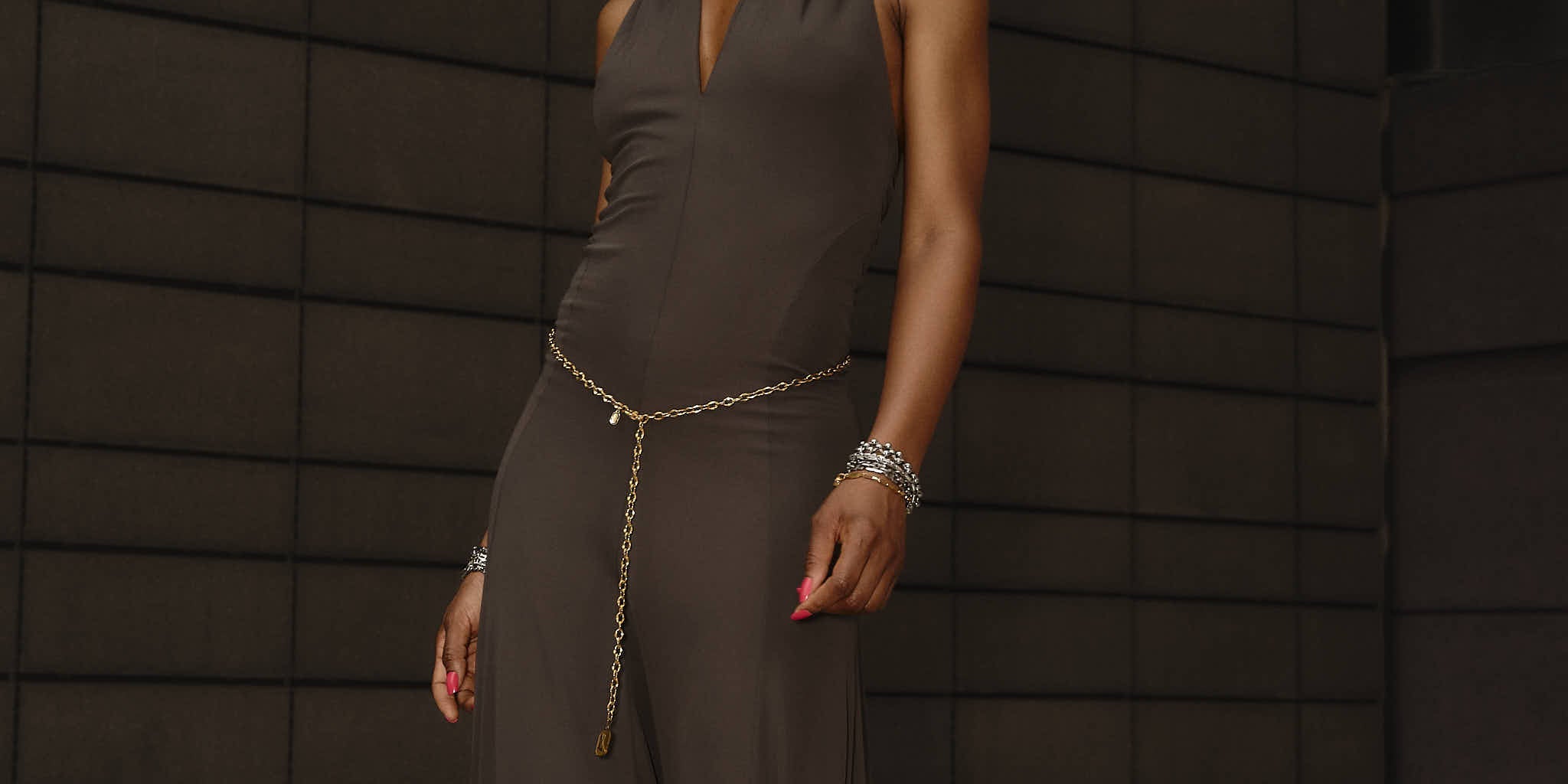
The chain belt is different because it occupies the one part of the body that most occasion dressing ignores entirely: the waist. A beautifully dressed woman in a floor-length gown with nothing at the waist has a silhouette. The same woman with a gold chain belt cinched at the waist — or worn cascading down an open back — has a look. The chain creates a focal point that the eye returns to, a line that gives the whole outfit direction and composition.
It also solves a very practical problem. Guests are frequently expected to find an outfit that works from day to evening, across different settings and often in unpredictable weather. A chain belt doesn't care whether you're at a garden ceremony or a ballroom reception. It doesn't wilt, doesn't wrinkle, doesn't need to be carried. It goes on in the morning and it's still doing its job at midnight.

How to choose the right chain belt for a wedding guest outfit
Not every chain belt reads the same way on an occasion dress, and the choice matters more here than in everyday dressing. A few principles worth considering:

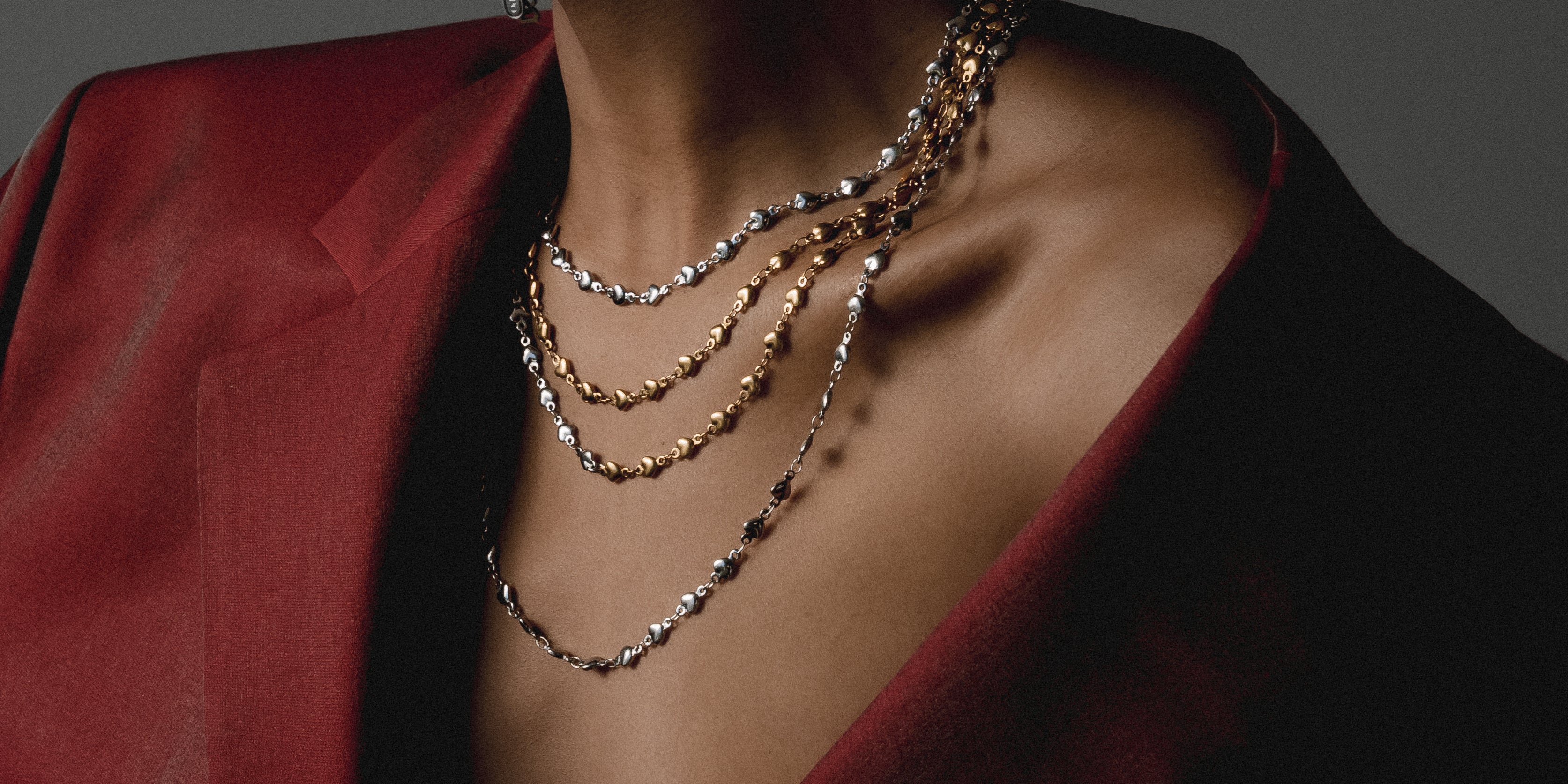
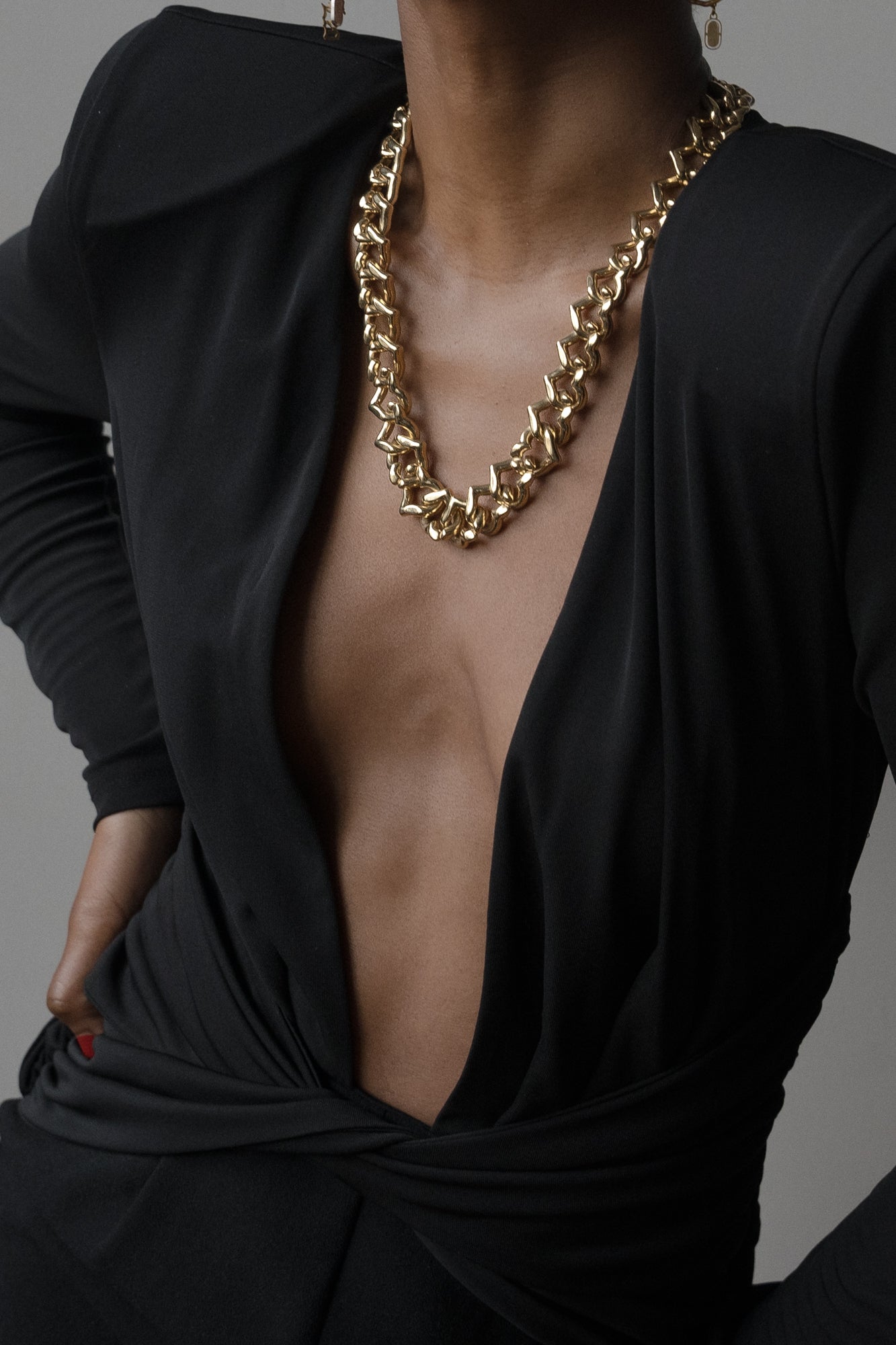
Gold for embellished and floral dresses. When the dress is already doing a lot — pattern, texture, embellishment — gold is the warmer and more integrated choice. It doesn't create harsh contrast with busy fabric. It adds warmth and richness without fighting the dress for attention. Layered gold chains on an embellished floral maxi dress create depth and intention without tipping into excess.
Single chain for maximalist dresses, layered for simpler ones. If the dress is heavily embellished or boldly printed, one well-chosen chain worn at the waist is enough — it anchors the look without competing with the fabric. If the dress is simpler — a solid midi, a slip dress, a column gown — layering two chains of different weights and widths creates the visual interest that the dress itself doesn't provide.
Length and proportion matter. A chain that falls to the mid-hip works beautifully with floor-length occasion dresses — it creates a vertical line that elongates without overwhelming. A shorter chain worn strictly at the natural waist reads more structured and tailored, better suited to midi-length or cocktail-length dresses. For open-back styles, a longer chain has more opportunity to cascade beautifully down the spine.
Consider the back. If your dress has an open back, a chain belt gives you the option to let it fall naturally down the center of the back, creating that spine-grazing vertical detail. It's a chain belt styled unconventionally, which is exactly what makes it interesting. It falls vertically down the spine, catching light as you move through the room. This is the styling detail that makes people turn around when you walk away. The last thing they see, and the first thing they remember.


The dresses that work best — and why
Wedding guest dressing is leaning into one standout element leading the outfit — whether that's a dramatic sleeve, an asymmetric neckline, or subtle embellishment — while keeping everything else understated. The chain belt sits right in that tension: it's the standout element that doesn't compete with the dress. It works with it.
Heavily embellished maxi dresses. The sequined, beaded, or embroidered floor-length gown that looks like a lot — and is a lot — benefits enormously from a chain belt that gives the silhouette definition. Without something at the waist, an embellished maxi can feel like the dress is wearing you. A gold chain belt cinched at the waist puts you back in control of the silhouette.
Bold floral prints. The dress that's already a statement. The chain belt here isn't competing — it's anchoring. It gives the eye a fixed point in the middle of the print and makes the whole look feel considered rather than just dramatic. A romantic, vintage-inspired floral print is a completely timeless choice for wedding season — the kind of piece you'll wear again and again. The chain belt is what makes it yours rather than just beautiful.
Simple slip dresses and column gowns. The more minimal the dress, the more the chain belt becomes the story. A clean-lined satin midi in a solid color with a layered chain stack at the waist is one of the most elegant wedding guest combinations possible — the simplicity of the dress makes the chain feel architectural rather than decorative.
Open-back dresses of any length. As discussed — the chain belt cascading down the spine of an open back is the wedding guest styling move of the season. Works with maxi, midi, and cocktail lengths equally, and creates a back view that earns its own moment.

FAQ
Is it appropriate to wear a chain belt to a formal wedding?
Yes — and arguably a chain belt is more appropriate at a formal wedding than at a casual one, because it reads as jewelry rather than hardware. A fine gold chain worn at the waist of a floor-length gown is a piece of body jewelry as much as it is a belt. At a black-tie or formal occasion, that register is exactly right.
Won't a chain belt compete with an embellished dress?
Only if you let it. The key is positioning: worn at the natural waist, a chain belt defines the silhouette without drawing focus away from the dress's embellishment. It's working with the dress, not against it. The eye reads the dress first and the belt as the punctuation — the thing that tells you the person wearing this outfit made a deliberate choice.
How do I keep the chain belt in place on a flowing dress?
For dresses without belt loops, fasten the chain snugly enough at the waist that it sits without moving — Lapo Lounge chain belts are fully adjustable, which means you can get the fit exactly right. If the dress has a natural waist seam, the chain can rest against it for additional stability. For very lightweight or silky fabrics, a small piece of fashion tape at the side where the chain rests against the fabric can prevent slipping.
Should I match the chain belt metal to my other jewelry?
The conventional advice is yes — match your metals. Our advice is more nuanced. If you're wearing a single chain belt, matching to your earrings and other jewelry creates cohesion. If you're layering two chains of different metals — gold over silver, for example — then keeping the rest of your jewelry in one metal prevents the look from becoming visually busy. The chain stack is already doing the work of mixing metals; your earrings don't need to join in.
Can a chain belt work for an outdoor or garden wedding?
Absolutely. Lapo Lounge chain belts are made from recycled stainless steel — they don't tarnish in heat and don't require any special care. Garden and outdoor weddings tend toward more relaxed dress codes — flowy dresses, soft silhouettes, settings where comfort and style need to work together. The chain belt is exactly right for that context — it adds intention to a relaxed look without making it feel overdressed for the setting.
What if my dress already has a lot going on — sequins, embroidery, heavy embellishment?
This is actually where the chain belt shines most. A single chain worn at the natural waist gives an embellished dress a waist — a focal point, a place for the eye to land before it travels up and down the dress. The principle is to let one standout element lead while keeping everything else complementary. On an embellished dress, the dress is the standout. The chain belt is what makes it read as a decision rather than just a gown.

The edit
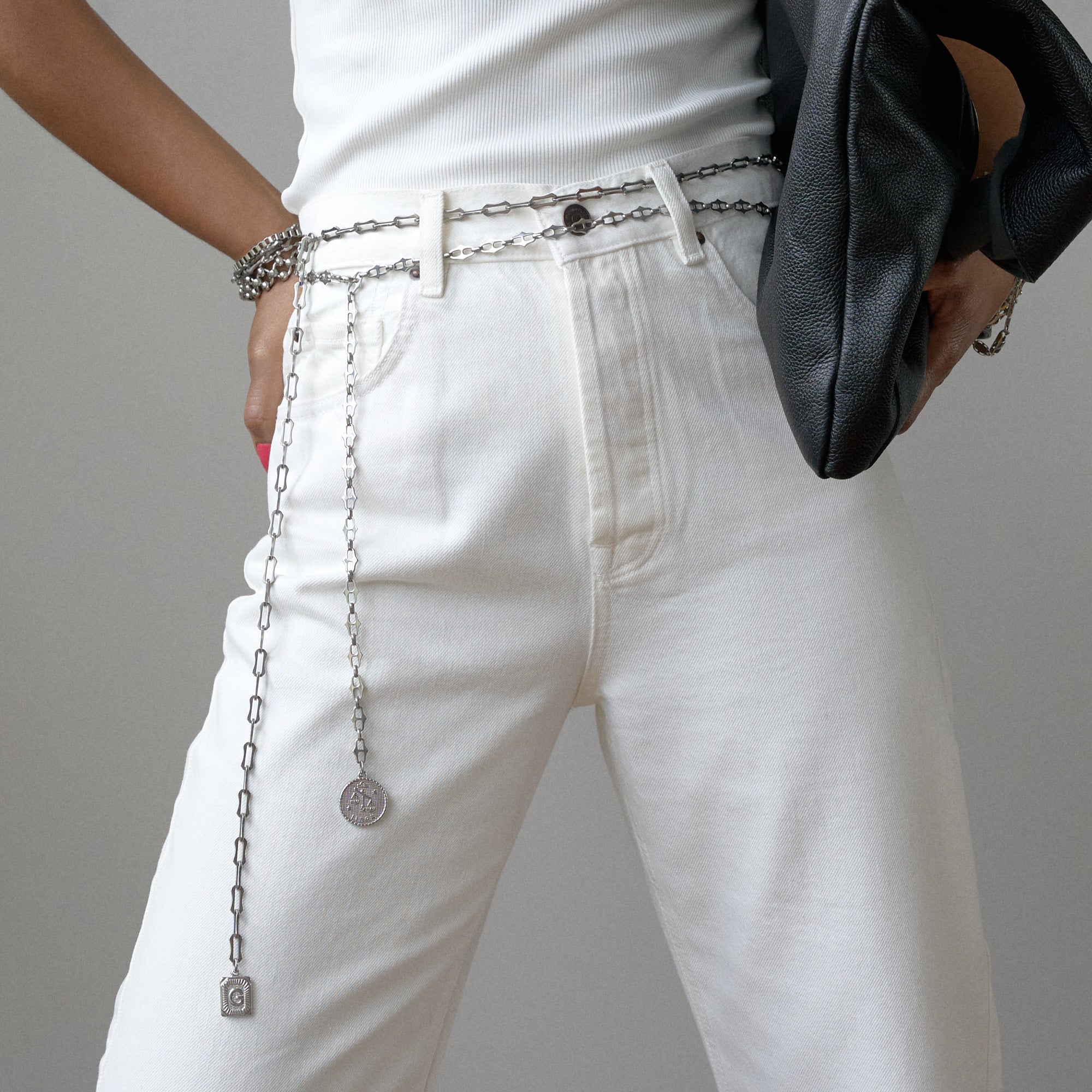
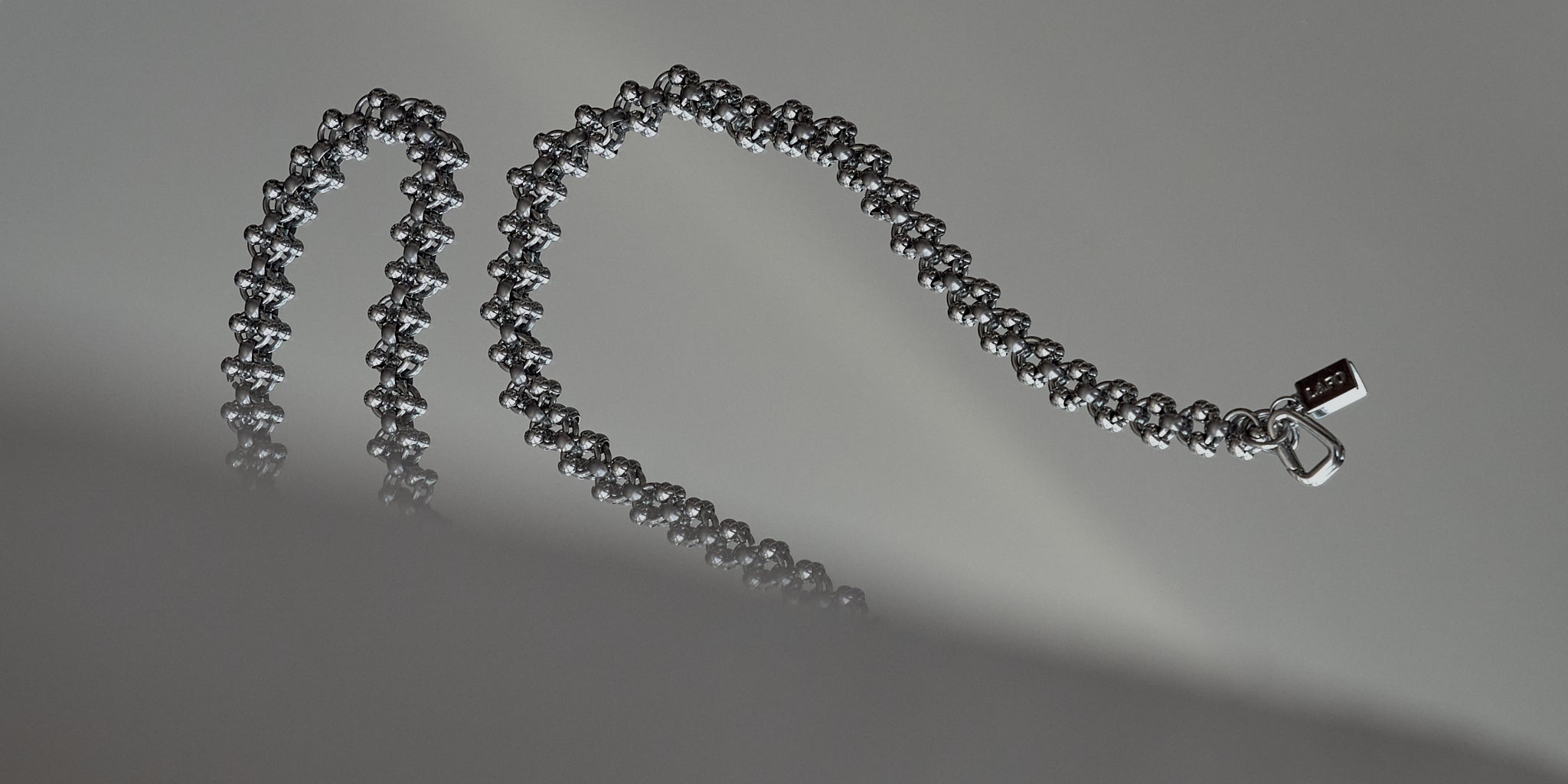
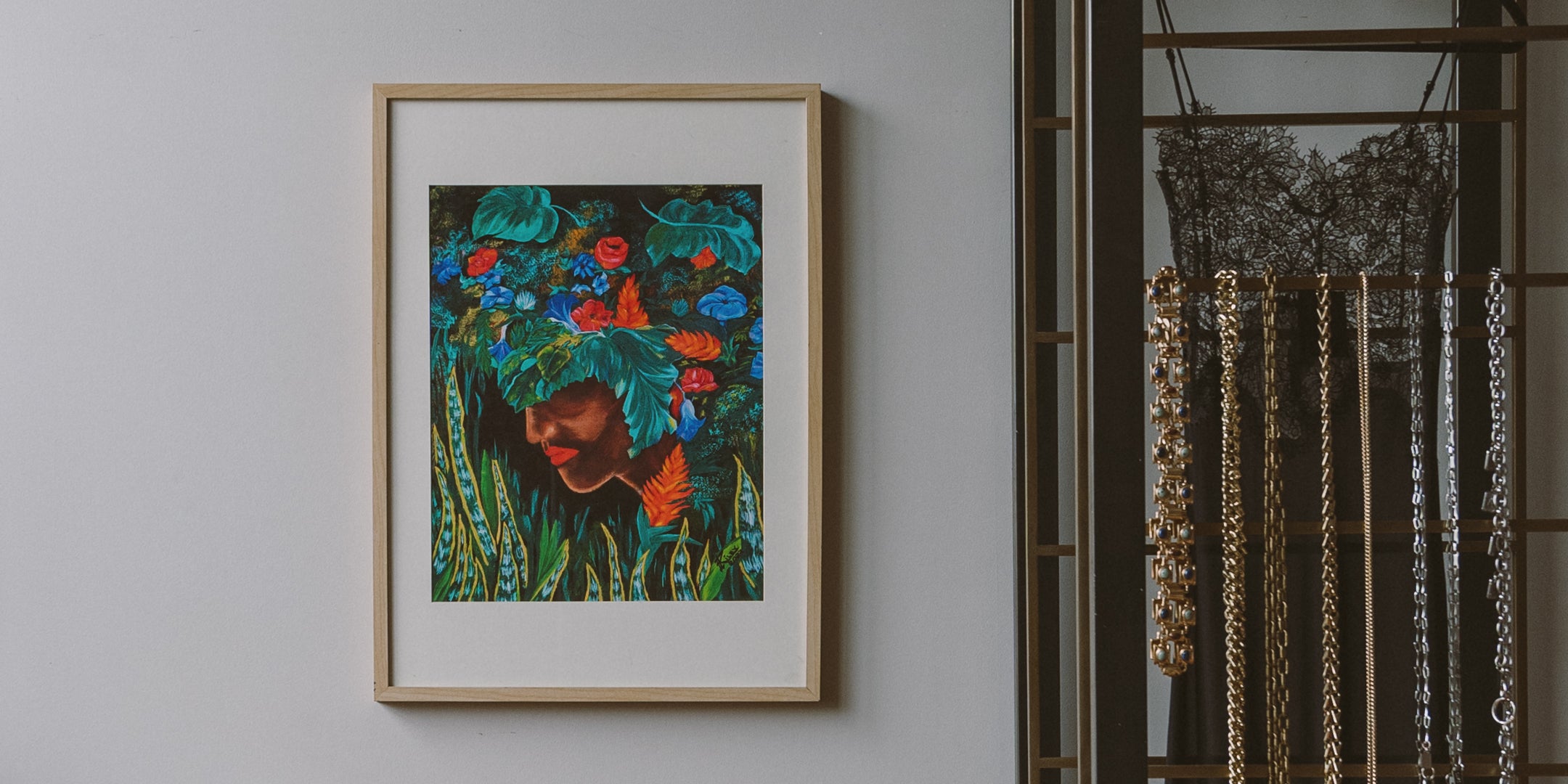
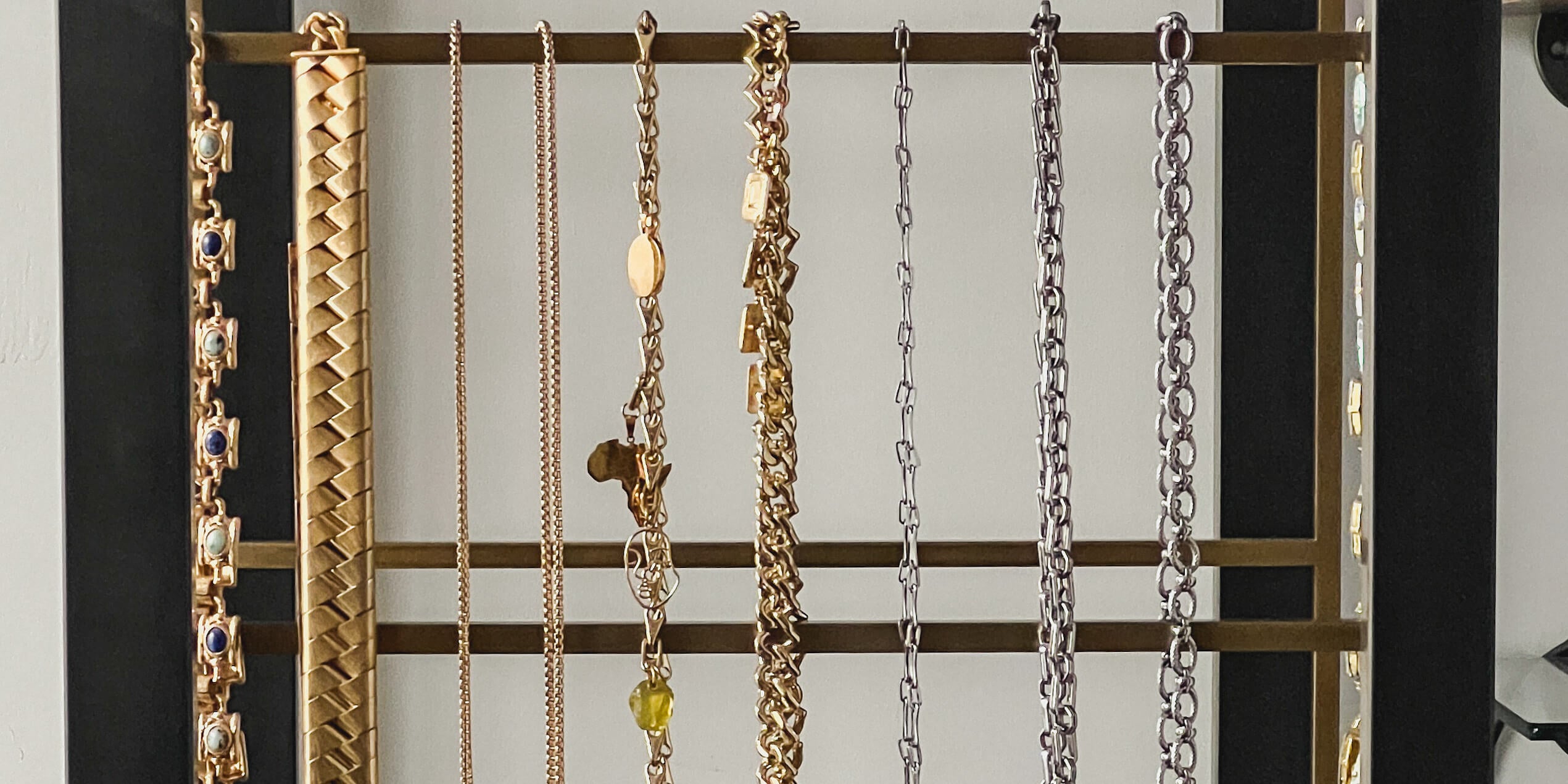
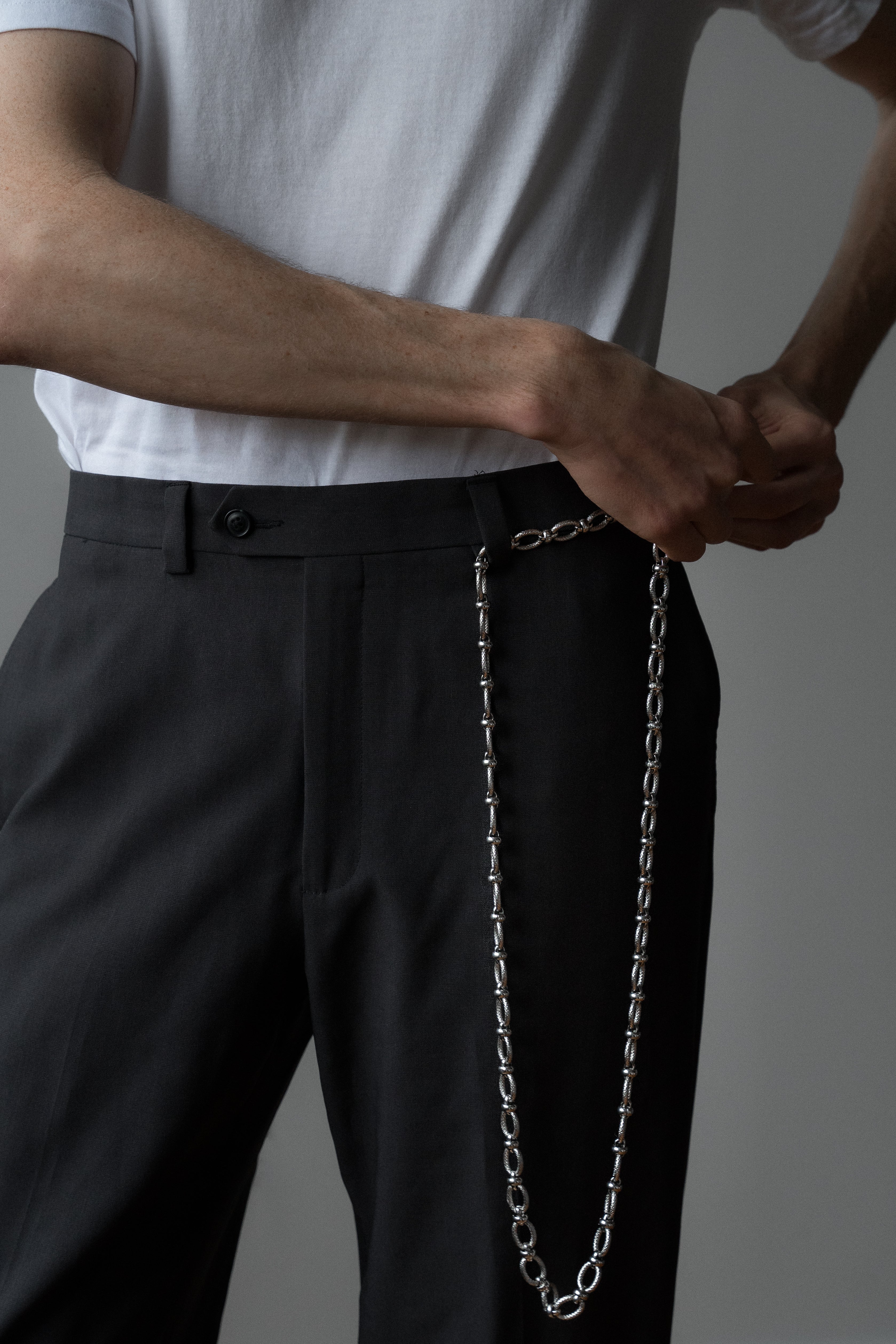
The Lapo Lounge collection includes chain belts in gold and silver, across a range of link weights and widths — from fine, delicate chains that sit close to the body and read almost like a waist necklace, to chunkier link styles that make a more architectural statement. All are fully adjustable, all are made in Brooklyn from recycled stainless steel, and all are designed to be worn in ways that go beyond the obvious.
For wedding season, the gold options are a natural starting point — warm metal against occasion-wear fabrics reads as jewelry rather than hardware, which is exactly the register you want. The Zira in gold, worn layered for a more embellished dress or as a single chain on a simpler silhouette, is the piece this edit was built around.
You'll be remembered. Not for the dress — for what you did with it.