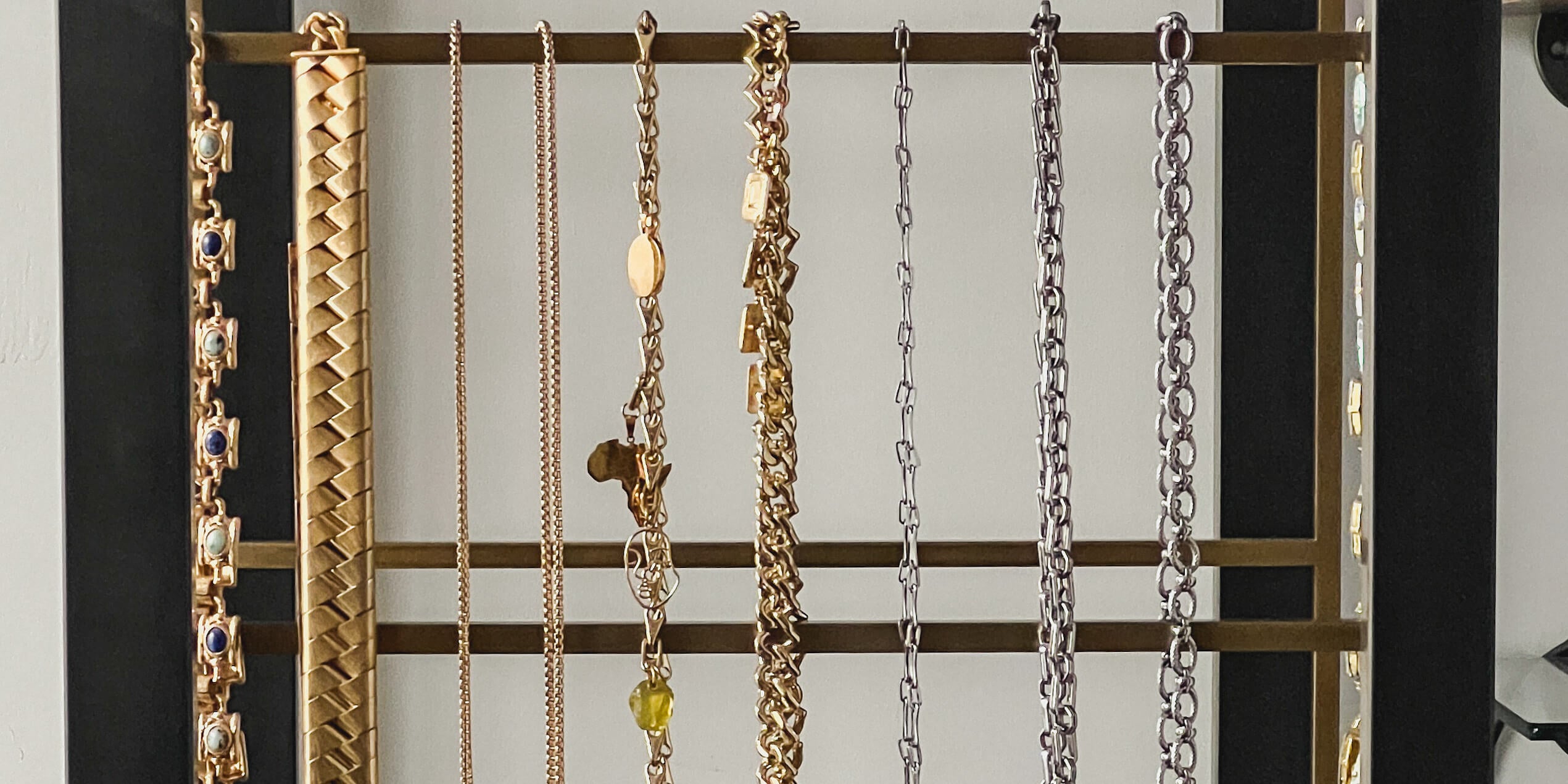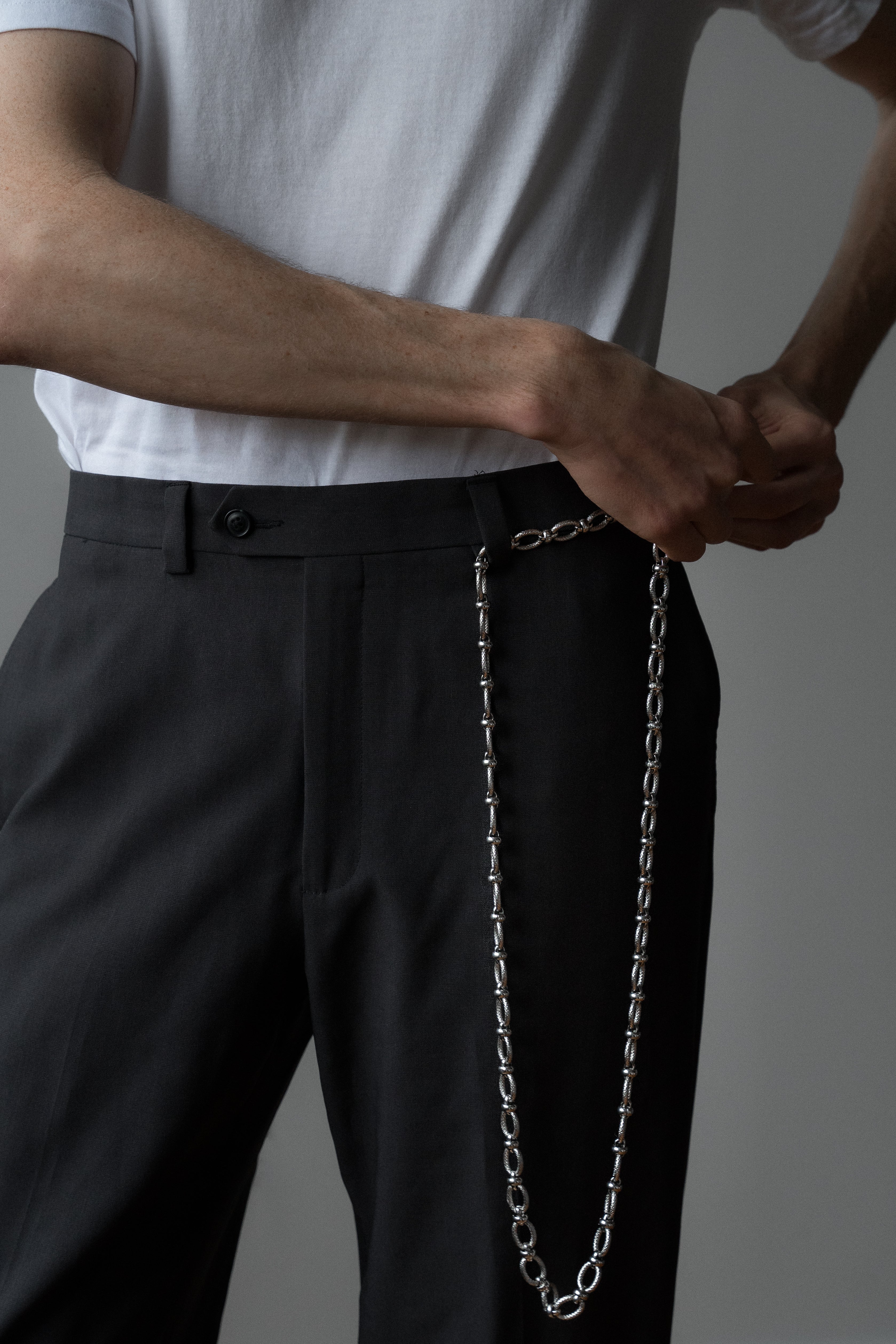
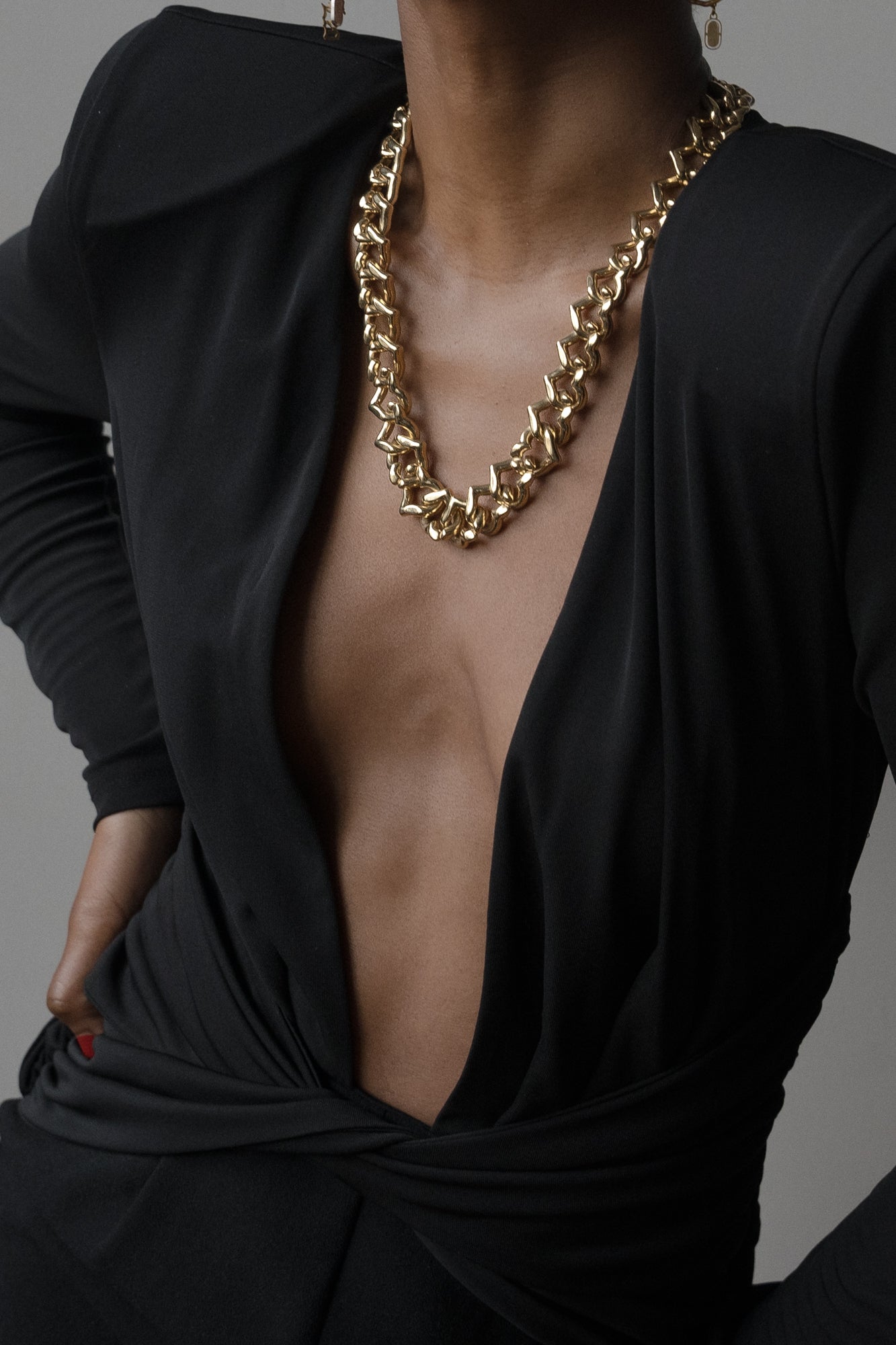

The old rule that gold and silver should never meet feels more inherited than meaningful. It belonged to a way of dressing that prized coordination above everything else: shoes matched bags, jewelry stayed within one metal family, and the result was tidy, but controlled.
Mixing metals changes that. It adds contrast, tension, and movement, which is exactly why it feels so current. That tension is what makes an outfit feel alive.
Nowhere is that more visible than at the waist.


Chain belts are already expressive; layered together, they become part of the outfit’s architecture. When gold and silver are mixed with intention, the eye doesn’t settle — it travels.
“Yes, you can mix gold and silver chain belts, and the best results come from balancing weight, proportion, and contrast.”
Why do gold and silver work together?
Gold and silver behave differently in light. Gold catches warmth, reflecting amber and honey tones from the environment, while silver feels cooler and more architectural. Worn together, they create a visual conversation rather than a clash.
That contrast is what makes the combination feel alive. A mixed-metal stack can shift with the setting — brighter in daylight, richer in evening light, softer indoors. A single metal can be beautiful, but it usually reads as a single note. Mixed metals create a chord.
The other thing that matters is proportion. When chains are similar in weight and scale, they feel resolved. When one is much heavier than the other, the pairing can look accidental instead of deliberate.

What is the easiest way to start?
Start with two chains: one gold and one silver. Keep the weights similar and wear them against a simple base like black, white, denim, or a saturated solid color.
That formula is the most wearable because it lets the metals do the work. You get contrast without visual clutter, which makes the result feel clean and intentional.
If you want a simple rule to remember, use this: similar weight, clear contrast, uncomplicated outfit.
Five ways to style gold and silver chain belts
The Statement Layer
The silhouette: Violet dress
The anchor: Eris silver, Himalia silver, Hyperion gold
This is the most obviously styled version: three chains at the waist, with the gold placed amongst two silver chains. The result is a warm interruption inside a cooler stack.
This works best against saturated color — violet, cobalt, deep burgundy — because the fabric already holds both warm and cool references. The mixed metals extend that effect rather than competing with it.
If you want the look to feel intentional, let the gold be the focal point. One warm chain in a silver stack reads as considered. An even split can feel less resolved.


The Everyday Mix
The silhouette: White denim
The anchor: Aminatu gold charm, Rogue silver zodiac coin
This is the easiest version to wear: two delicate chains, one gold and one silver, on a neutral base. On white denim, the contrast does most of the work.
The charm and the coin give each piece a different identity. One feels decorative, the other almost talismanic. Together, they feel curated without trying too hard.
If you’re new to mixing metals, this is the best place to start. Two chains, two tones, one clean backdrop.


The Maximalist Stack
The silhouette: Structured black coat
The anchor: Callisto gold, Eris silver, Hyperion gold, Himalia silver, Zira gold
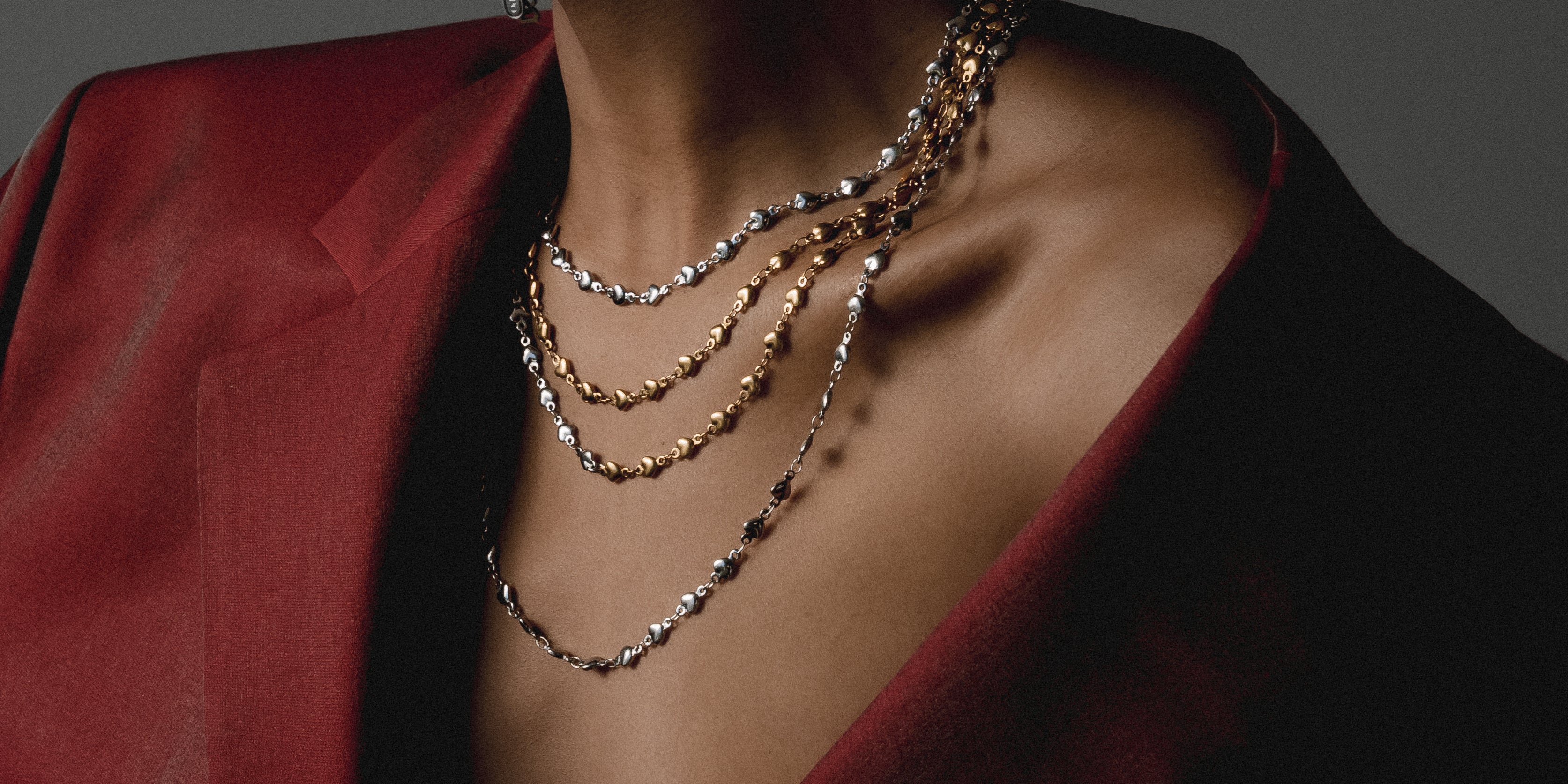
Five chains, mixed gold and silver, layered against a strong black base. Here, the hardware becomes the visual language of the outfit.
The gold slightly outweighs the silver, which warms the overall effect. The silver still matters, though — it keeps the stack from reading as overly ornate or one-dimensional.
This kind of look needs structure underneath it. A black coat gives the stack a frame, so the chains can stay expressive without looking unruly.


The Crossbody Drape
The silhouette: Black blazer dress
The anchor: Aminatu gold, Pulse silver
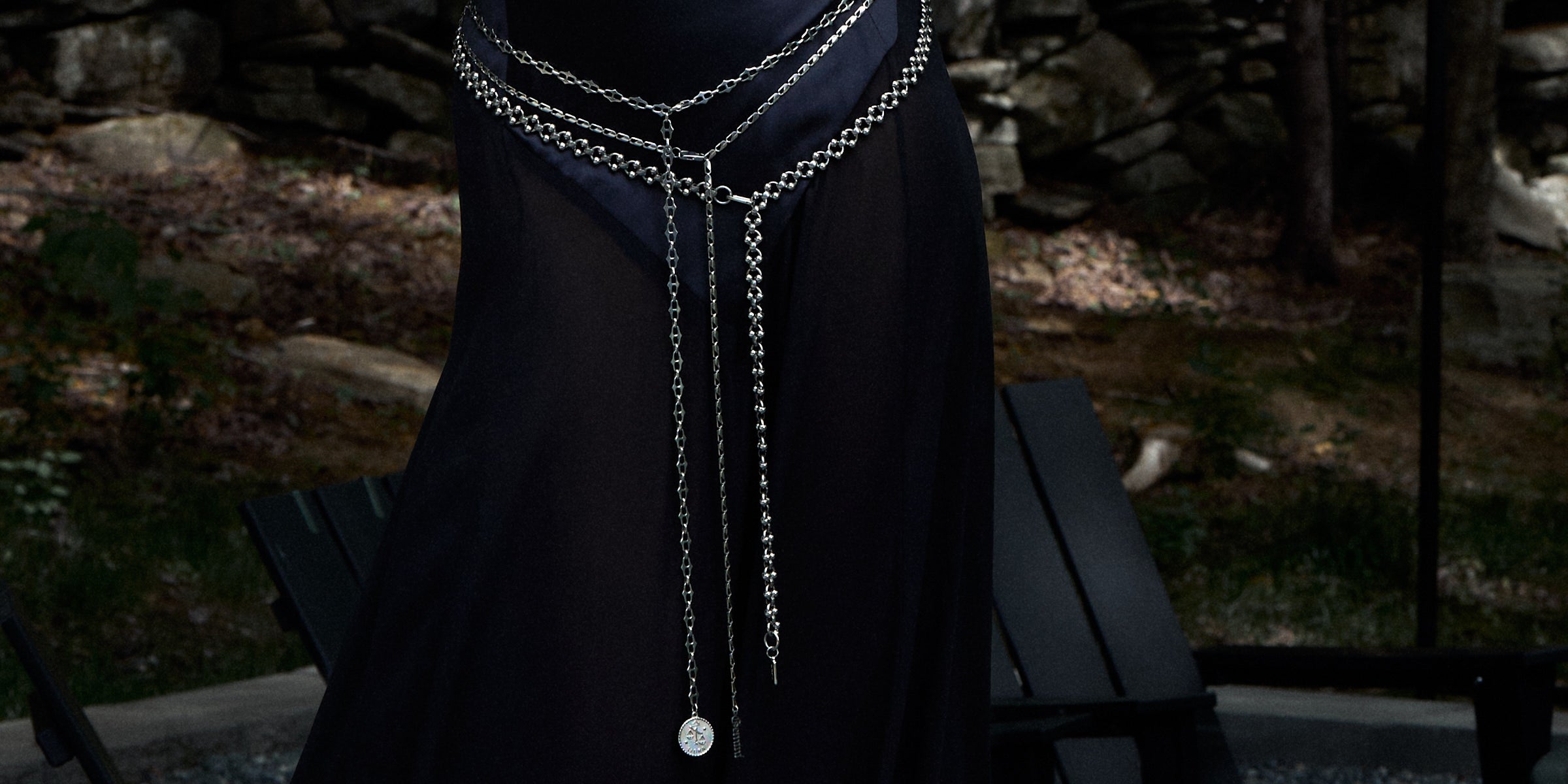
Not every chain belt has to stay at the waist. In this version, the chains drape across the body, moving at different lengths and angles as the wearer moves.
The silver chain introduces contrast in both tone and link profile, which helps separate each piece visually. On a fluid dress, that movement becomes part of the styling.
This is one of the most interesting ways to wear chain belts because it makes the body part of the composition. The belt doesn’t just sit there — it shifts.


The Minimal Two
The silhouette: Monochrome black
The anchor: Forge silver, Aminatu gold
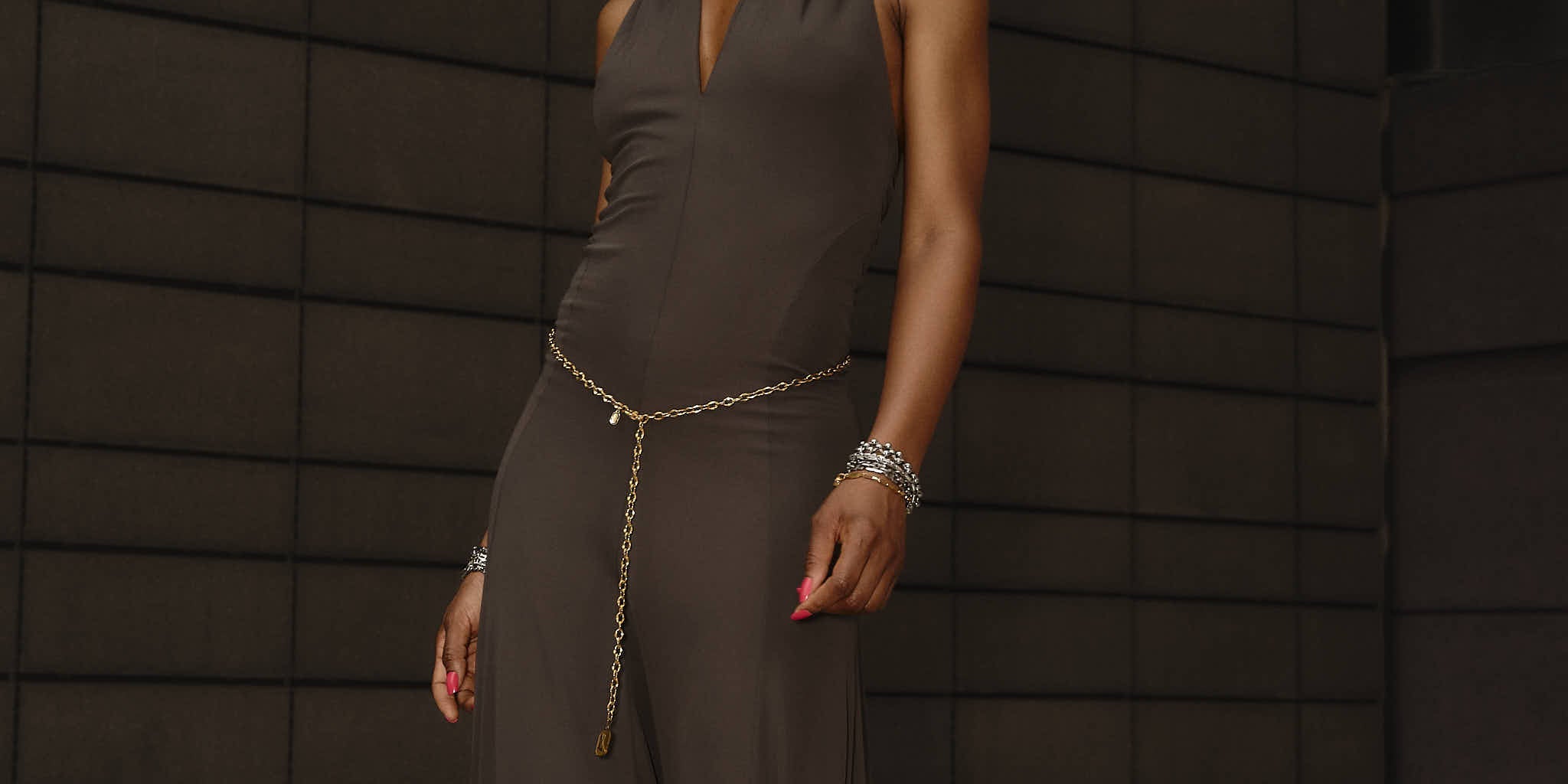
This is the simplest version, and often the strongest. One gold chain, one silver chain, worn cleanly at the waist. On a warm color like coral or terracotta, silver cools the palette while gold amplifies it. The result is balanced, not neutral.
If you want one formula to remember, it’s this one. Start with two chains of similar weight and let the outfit do the rest.


What should you avoid?
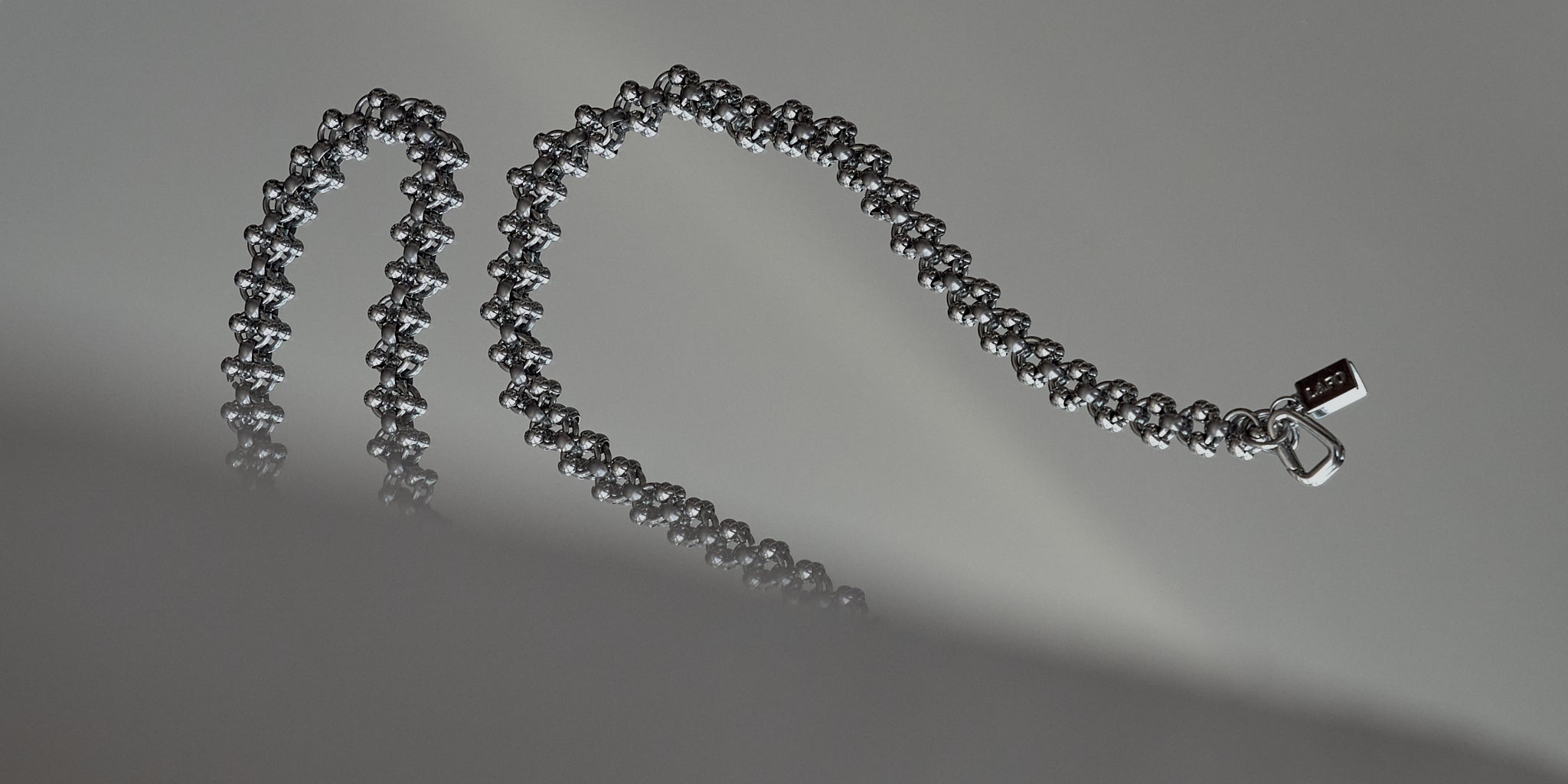
There are very few hard rules here, but proportion still matters. Avoid pairing a very delicate chain with a heavy industrial one. The contrast in scale can make the combination feel accidental, even if the metals themselves are beautiful together.
A quick test helps: if one chain visually dominates the other at a glance, the weights are probably too far apart. Fine with fine. Substantial with substantial. Once the scale is right, the tones can vary freely.

When does mixed metal styling work best?
Mixed metals tend to work best when the rest of the outfit is simple enough to give them room. A clean silhouette, a single strong color, or a structured shape helps the chain belts feel intentional.
They also shine when the outfit has both soft and hard elements. A fluid dress with structured hardware, or a tailored coat with loose draping, gives the metals something to interact with.
That’s really the appeal: Mixed metals don’t just decorate an outfit. They give it tension.
The Shift
Once you begin mixing metals, the old rule reveals itself for what it is: not a principle, just a habit.
And habits are easy to break.

FAQ
Can you mix gold and silver chain belts together?
Yes. Gold and silver chain belts can be worn together, especially when the chains are balanced in weight and styled with intention.
How do you make mixed metals look intentional?
Keep the chain weights similar, repeat each metal at least once, and use a neutral or saturated base color that gives the combination room to stand out.
What colors work best with gold and silver chain belts?
Neutral shades like white, black, and denim work well, as do saturated colors like violet, burgundy, coral, royal blue and terracotta.
What is the easiest way to start?
Begin with two chains — one gold and one silver — and keep the rest of the look simple.